There is a question that comes up repeatedly among London restaurant owners, catering managers, and food business operators, and the answer matters far more than most people realise.
What exactly is the difference between commercial kitchen cleaning vs restaurant kitchen cleaning? Are they the same thing with different names? Does one standard cover both? And does it actually matter which one you book or just that the kitchen gets cleaned?
It matters enormously. And the confusion between these two terms is costing London food businesses real money in failed hygiene inspections, in insurance complications, in staff illness, and in the kind of kitchen fires that start in grease saturated extraction systems.
This answers every question you actually need answered. What each service covers, when each applies, what London Environmental Health Officers look for, how much professional kitchen cleaning costs in London in 2026, and critically why London restaurant and food business owners consistently choose professional kitchen cleaners over in house cleaning, even when they have qualified kitchen staff who could theoretically do it themselves.
£3,000+ average fine for a London food business that fails an Environmental Health inspection for poor kitchen hygiene
60% of London restaurant kitchen fires are caused by grease build up in extraction systems the area chefs almost never clean
72 hrs maximum time London food businesses have to remediate critical hygiene failures before a second unannounced inspection
Commercial Kitchen Cleaning vs Restaurant Kitchen Cleaning What Is Actually Different
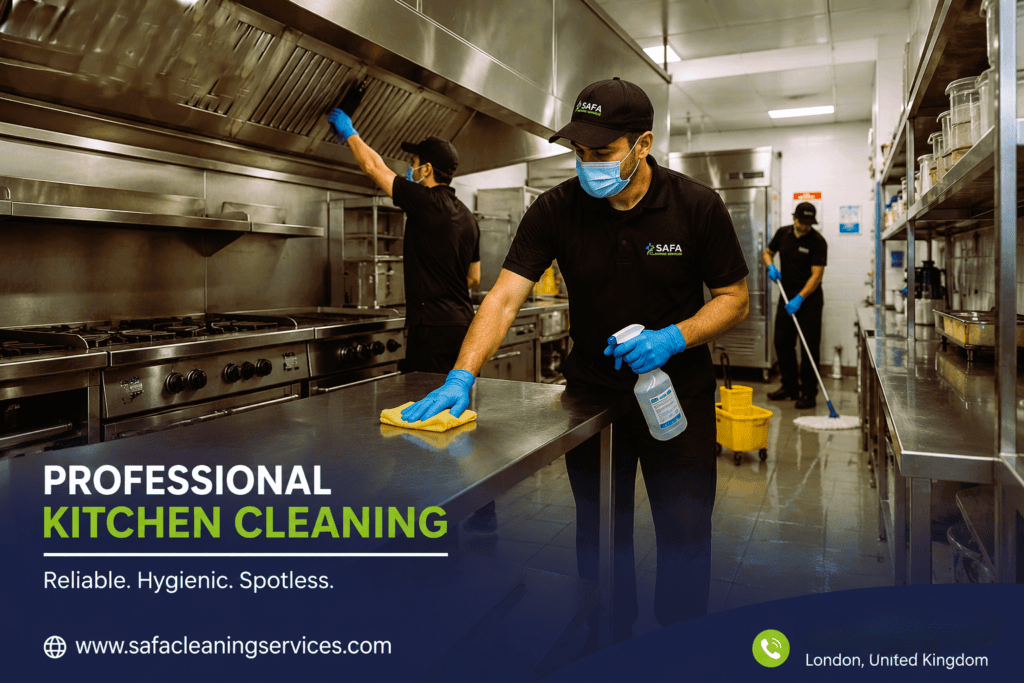
The April 2026 Google AI Overview for this search query puts it directly: restaurant cleaning covers the wider venue, while restaurant kitchen cleaning focuses on the food prep and cooking environment. That distinction is the starting point but it barely scratches the surface of what actually separates these two service categories in practice.
What Commercial Kitchen Cleaning Covers
A commercial kitchen cleaning service is designed for any professional food preparation environment, not just restaurants. This includes hotel kitchens, hospital and care home catering facilities, school and university canteens, food manufacturing units, dark kitchens and delivery only operations, events catering kitchens, and corporate office canteens across Central London, East London, West London, North London, and South London.
The defining characteristic of commercial kitchen cleaning is that it is scoped against UK food safety legislation specifically Food Safety Act 1990, Regulation (EC) 852/2004 on food hygiene, and the London Environmental Health standards that determine whether a business stays open or gets shut down. Every task is performed to a documented, certifiable standard.
What Restaurant Kitchen Cleaning Covers
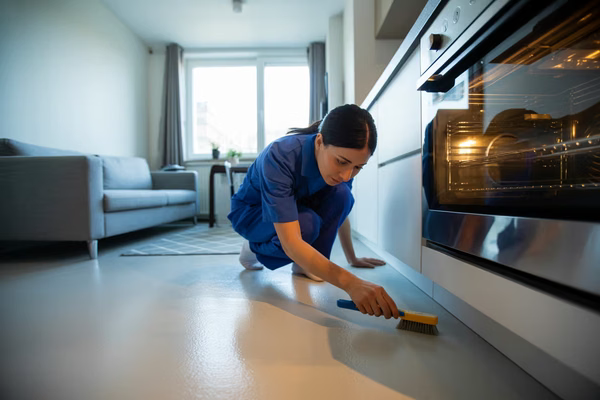
Restaurant kitchen cleaning is a subset of commercial kitchen cleaning but with a specific operational context. A restaurant kitchen runs service three times a day, every day. It uses every piece of equipment simultaneously. The grease and carbon build-up on a restaurant hob, oven, fryer, and extraction canopy after a week of full service is categorically different from a hotel kitchen that runs breakfast service only.
London restaurant kitchens also operate under Michelin level scrutiny from the Food Standards Agency (FSA). The hygiene ratings that appear on restaurant windows 1 to 5 stars are determined by Environmental Health Officers (EHOs) who inspect kitchen cleanliness as a primary criterion. A poorly cleaned kitchen in a Central London restaurant is not just a safety risk. It is a direct commercial threat.
| Factor | Commercial Kitchen Cleaning | Restaurant Kitchen Cleaning |
| Scope | Any professional food prep environment | Restaurant dining and kitchen combined |
| Frequency | Varies by business type | Daily, weekly, and deep clean cycles |
| Grease extraction | Included high priority | Critical fire risk compliance required |
| EHO compliance focus | Food Safety Act / EC 852/2004 | FSA hygiene rating system (1–5 stars) |
| Documentation provided | Cleaning log, certification | Cleaning log + FSA-ready hygiene report |
| Equipment used | Industrial degreasers, steam, HWE | Same + specialist fryer and grill cleaning |
| Typical London cost | £300–£2,500+ depending on scale | £400–£3,000+ depending on volume |
| Suitable for | Hotels, hospitals, schools, dark kitchens | Restaurants, gastropubs, food service venues |
Why London Restaurant Owners Don’t Just Ask Their Chefs to Clean
This question comes up consistently in London food business forums and Reddit discussions and the answer is more layered than most people expect.
The short answer is not that chefs cannot clean. A good chef knows a clean kitchen. The short answer is that deep commercial kitchen cleaning is a completely different discipline from kitchen maintenance and expecting a chef to do both is like expecting your accountant to also file your legal cases. The skills overlap slightly. The specialisation does not.
Reason 1: The liability issue. In London, if a kitchen is inspected by an Environmental Health Officer and fails on hygiene grounds, the responsibility falls on the business owner or operator not on the kitchen staff. A professional commercial kitchen cleaning company provides documented evidence of cleaning to the required standard: logs, certificates, and reports that demonstrate compliance. A chef cleaning at the end of a shift provides none of these.
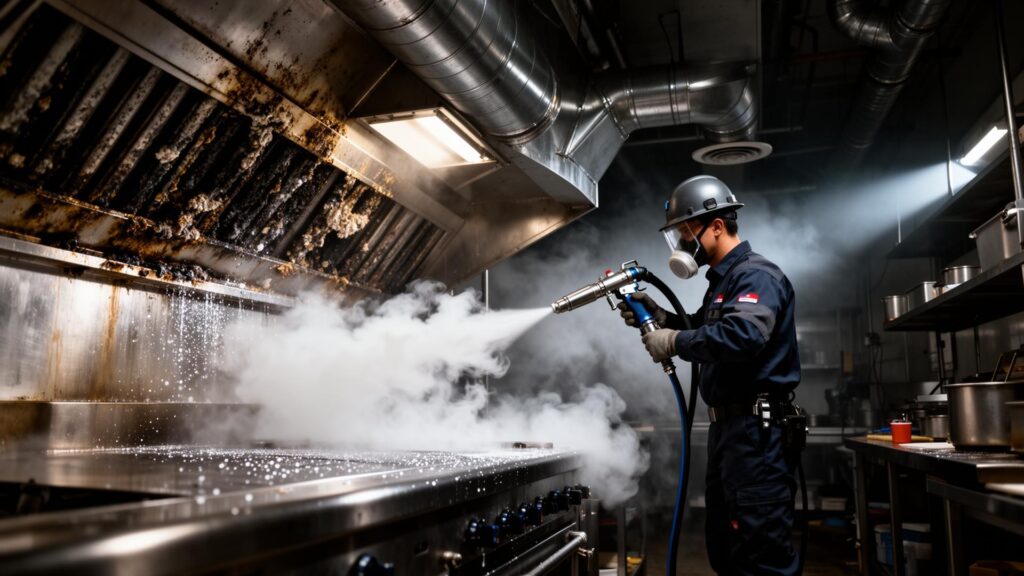
Reason 2: The equipment issue. Properly degreasing a commercial extraction canopy requires industrial alkaline degreasers applied at the correct concentration with the correct dwell time, followed by hot water extraction or steam cleaning at temperatures that neutralise the grease residue completely. A kitchen mop and a bottle of Flash does not do this. The grease stays and grease in extraction systems is a fire risk that insurance companies specifically exclude if the system has not been professionally cleaned to TR19 standard.
Reason 3: The time and cost issue. A full deep commercial kitchen clean in a London restaurant takes 4–10 hours depending on kitchen size and soiling level. That is 4–10 hours of post service time that a chef paid at London chef rates of £14–£22 per hour spent cleaning rather than prepping, developing menus, managing staff, or resting for the next service. The economics simply do not work. A professional kitchen cleaning team completes the same job faster, to a higher standard, with the correct equipment, and produces the documentation that protects the business.
Reason 4: The knowledge gap. Commercial kitchen cleaning covers systems that most kitchen staff are never trained on: TR19 ductwork cleaning standards, deep fryer oil management, conveyor toaster degreasing, commercial dishwasher deep cleaning, ventilation system certification, and post clean hygiene swab testing. These are specialist disciplines. A professional kitchen hygiene service trains specifically in these areas a chef trains in cooking.
Real London operator perspective (r/KitchenConfidential): “We tried having our kitchen porter do the deep clean monthly. Three months later we got a hygiene inspection and scored a 3. The EHO specifically noted the extraction canopy and behind the fryers. We brought in a professional kitchen cleaning company and scored a 5 on our next inspection. The professional clean cost £480. The reputational damage from a 3-star rating on the door cost far more.”
What a Professional Commercial Kitchen Clean in London Actually Covers
This is where most online guides fall short. They list surfaces without explaining the standard. Here is what a genuine professional kitchen cleaning service in London covers and why each element matters for compliance and safety.
Extraction Canopy and Ductwork The Highest Priority
Grease build up in extraction canopies and ductwork is the single biggest fire risk in any London commercial kitchen. TR19, the standard published by the Building Engineering Services Association (BESA) defines the cleaning frequency and method required for ventilation systems in commercial kitchens. Many London commercial property insurance policies are invalidated if the extraction system has not been cleaned to TR19 standard and documented with a certificate.
Professional commercial kitchen cleaners degrease the canopy interior, clean the grease filters, and access ductwork sections to remove accumulated grease deposits. This is not something that can be approximated with a spray and a cloth. It requires specialist equipment and a documented process that produces a TR19 compliance certificate.
Commercial Fryers and Grills
A commercial fryer used for full London restaurant service accumulates burnt oil, carbon deposits, and oxidised food particles that cannot be removed with the products available to a domestic or general commercial cleaner. Professional fryer cleaning uses high alkaline degreasers at specific temperatures, followed by thorough rinse and inspection. The result is a fryer that cooks correctly, produces food at the right temperature, and does not transfer carcinogenic burnt oil residue to food.
Grills and griddles accumulate carbonised grease that professional cleaners remove with blade scrapers, specialist chemical products, and high temperature steam restoring cooking surfaces to a condition that directly affects food quality and safety. Our dedicated deep kitchen cleaning London guide covers the full process in detail.
Cold Storage and Food Preparation Surfaces
Walk in fridges, blast chillers, and cold storage units in London commercial kitchens accumulate bacteria at the junctions between surfaces, door seals, shelf brackets, drain channels, and the floor wall joint at the base of cold rooms. These are the areas where Listeria, Salmonella, and other food borne pathogens survive and multiply.
Professional kitchen hygiene services clean these surfaces with food safe antibacterial solutions and can provide ATP (adenosine triphosphate) swab testing a scientific verification of surface cleanliness that produces a numerical result. ATP testing is increasingly requested by London Environmental Health Officers as objective evidence of cleaning effectiveness, and by London food businesses that want documented proof of hygiene standards.
Commercial Dishwashers and Warewashing Equipment
A commercial dishwasher in a Central London restaurant washes hundreds of covers per service. Scale build up, detergent residue, and food particle accumulation inside the wash chamber, the filters, and the spray arms reduces wash quality and creates a bacterial reservoir that taints every item that passes through. Professional deep cleaning of the dishwasher as part of a commercial kitchen cleaning service restores wash performance and eliminates this hygiene risk.
Floors, Walls, and Drains
Commercial kitchen floors particularly grouted quarry tile and non slip safety flooring common in London restaurant kitchens accumulate grease, food debris, and bacteria in every joint and texture. Standard mopping circulates this contamination rather than removing it. Professional cleaning uses hot water extraction, steam cleaning, and alkaline degreasers to clean the floor surface properly including the drain channels, which are one of the most consistent fail points in London EHO inspections.
How Much Does Commercial Kitchen Deep Cleaning Cost in London? (2026 Pricing Guide)
This is the question that London restaurant and food business owners search for most and the one that most guides avoid answering directly. Here are honest 2026 London market rates.
| Kitchen Type / Size | Service Level | Typical London Cost (2026) |
| Small café / sandwich bar | Full deep clean | £200–£400 |
| Medium restaurant (covers 40–80) | Full deep clean | £400–£800 |
| Large restaurant (covers 80–150) | Full deep clean | £700–£1,400 |
| Hotel / event kitchen | Full deep clean | £800–£2,500 |
| Dark kitchen / delivery only | Full deep clean | £350–£700 |
| Extraction canopy only (TR19) | Specialist ductwork clean | £300–£900 |
| Weekly maintenance clean | Regular service contract | £150–£500/week |
| Monthly deep clean contract | Scheduled deep clean | £400–£1,200/month |
| Emergency / same day kitchen clean | Priority response | £500–£2,000+ |
These figures reflect the London market in 2026. The significant variable is the condition of a kitchen that has been maintained with regular professional cleaning costs considerably less per deep clean than one that has been cleaned only by kitchen staff for 12 months. The grease load, carbon accumulation, and the time required to restore compliance is directly proportional to maintenance history.
For emergency situations a pre-inspection clean, a fire incident response, or a same day requirement ahead of a food hygiene visit Safa Cleaning Services provides same day kitchen cleaning across London with priority response and full documentation.
Cost vs Risk Reality Check: A London restaurant with a 3-star FSA hygiene rating loses an estimated 15–30% of bookings from customers who check ratings before dining. In a 60-cover London restaurant turning £4,000 per service, that is £600–£1,200 lost per service. A professional kitchen deep clean at £600 that restores a 5-star rating pays for itself in a single service.
How Often Should a London Restaurant Kitchen Be Professionally Cleaned?
This is the question every London food business owner needs a direct answer to not a vague “it depends.” Here is the honest frequency guide based on kitchen type and usage intensity.
| Kitchen Area / Task | Minimum Frequency | High Volume London Kitchen |
| Daily clean (kitchen staff) | After every service | After every service |
| Extraction filter cleaning | Weekly | Twice weekly |
| Full canopy degreasing (TR19) | Every 6–12 months | Quarterly |
| Fryer full professional clean | Monthly | Fortnightly |
| Cold storage deep clean | Quarterly | Monthly |
| Floor and drain deep clean | Monthly | Fortnightly |
| Full kitchen deep clean | Every 3–6 months | Monthly |
| ATP swab testing | Annually minimum | Quarterly |
| TR19 ductwork certification | Annually | Bi-annually |
The Quora consensus from food hygiene professionals is consistent: the minimum standard for a London restaurant kitchen is a professional deep clean every three months, with extraction canopy cleaning to TR19 standard at least annually. High volume operations serving 100+ covers per service should deep clean monthly and certify extraction systems bi-annually.
Why London Commercial Kitchen Cleaning Is Different From the Rest of the UK
London food businesses operate under specific pressures that make professional kitchen cleaning more critical here than in most other UK cities.
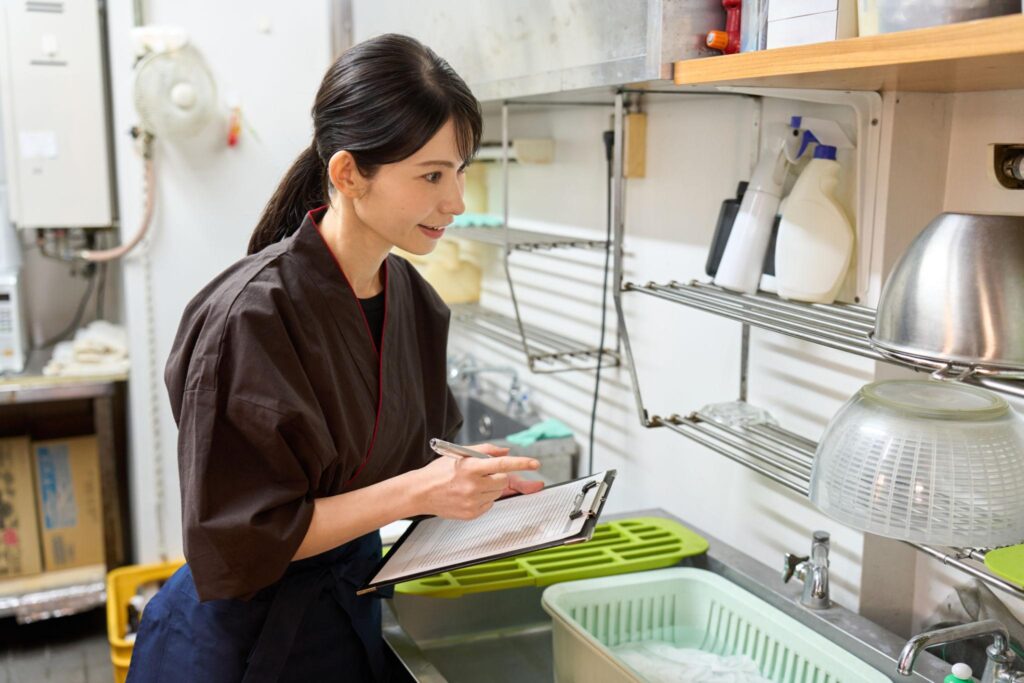
London EHO inspection frequency is higher. Environmental Health Officers in Greater London across boroughs including Westminster, Tower Hamlets, Southwark, Camden, Islington, Hackney, and Lambeth conduct unannounced inspections more frequently than most other UK local authorities. High restaurant density and high public footfall mean kitchens are scrutinised more often. A London restaurant that fails an inspection cannot afford to wait for a scheduled re-inspection; the reputational and commercial damage begins immediately.
London restaurant property types create specific cleaning challenges. Many Central London restaurants operate in basement kitchens with limited ventilation, in listed buildings where structural modifications are impossible, or in converted Victorian commercial premises with older drainage systems. These properties accumulate grease and moisture faster than purpose built facilities, and require commercial kitchen cleaners with specific experience in London’s varied and often challenging property stock.
The London food delivery boom created a new cleaning category. The explosion of dark kitchens and delivery only food operations across East London, North London, and South London particularly post 2020 created a new segment of food businesses running commercial kitchen equipment at high intensity without the front of house staffing that traditional restaurants use to maintain standards. These operations are disproportionately likely to fail hygiene inspections precisely because kitchen cleaning is no one’s primary responsibility. Professional commercial kitchen cleaning services specifically designed for dark kitchen operations are now a significant part of the London market.
Safa Cleaning Services provides specialist commercial cleaning services across London covering Central London, East London, West London, North London, and South London with full documentation and EHO-ready reporting on every commercial kitchen job.
How to Choose the Right Kitchen Cleaning Company in London
Not every company offering commercial kitchen cleaning in London provides the same service or the same standard. These are the questions every London food business should ask before booking.
- Do you clean the TR19 standard and provide a certificate? For extraction canopy and ductwork cleaning, TR19 certification is not optional; it is what your insurer and EHO require. Any company that cannot provide this should not be cleaning your extraction system.
- Do you provide ATP swab test results? Objective surface cleanliness data protects your business and demonstrates genuine cleaning effectiveness, not just a cleaned looking kitchen.
- Are you fully insured for commercial kitchen environments? Kitchen cleaning involves industrial chemicals, high temperature equipment, and gas appliances. Public liability insurance of minimum £5M is non negotiable in a London commercial kitchen.
- Do you have specific experience with London EGO standards? A company that primarily cleans domestic kitchens is not equipped for the documentation and standard required in a London food business inspection.
- Can you provide a same day or emergency response? EHO inspections are unannounced. A professional kitchen cleaning company that can respond on short notice for a pre-inspection clean is worth more than one that requires two weeks notice.
Safa Cleaning Services meets all of these criteria for London commercial and restaurant kitchen cleaning. Explore our kitchen cleaning services in London page for full details or contact us directly for a same day response and a free site assessment.
London Commercial & Restaurant Kitchen Cleaning EHO-Ready. TR19 Certified. Same Day Available. Safa Cleaning Services covers all London boroughs. Full documentation provided on every job. Deposit free quotes with 24hr response. Get your free kitchen cleaning quote today →
Frequently Asked Questions
Q: What is the difference between commercial kitchen cleaning vs restaurant kitchen cleaning?
Commercial kitchen cleaning covers any professional food preparation environment hotels, schools, hospitals, dark kitchens, catering facilities cleaned to UK food safety legislation standard with full documentation. Restaurant kitchen cleaning is a specific application focused on the food prep and cooking environment of a restaurant venue, with particular attention to fryers, grills, extraction systems, and FSA hygiene rating compliance.
Q: How much does commercial kitchen cleaning cost in London in 2026?
London 2026 pricing ranges from £200–£400 for a small café deep clean to £700–£1,400+ for a large restaurant kitchen. Extraction canopy TR19 cleaning costs £300–£900. Emergency and same day service carries a premium. Regular contract cleaning monthly or weekly reduces the per-clean cost significantly compared to one off bookings.
Q: How often should a London restaurant kitchen be professionally cleaned?
The minimum standard for a London restaurant kitchen is a full professional deep clean every three months, with extraction canopy cleaning to TR19 standard at least annually. High volume operations (100+ covers per service) should deep clean monthly and extract quarterly. Daily maintenance cleaning by kitchen staff does not substitute for professional deep cleaning; they are complementary, not interchangeable.
Q: Why don’t restaurant owners just have their chefs clean the kitchen?
Four reasons. First, liability professional kitchen cleaners provide documented evidence of compliance that protects the business in EHO inspections; chefs cleaning at the end of shift do not. Second, equipment proper extraction canopy degreasing, fryer cleaning, and ATP swab testing require specialist tools not available to kitchen staff. Third, economics paying chef rates for deep cleaning is more expensive than professional cleaning and removes skilled staff from their primary role. Fourth, standard professional cleaning achieves and documents a compliance standard that in house cleaning rarely reaches.
Q: What is TR19 standard and why does it matter for London kitchens?
TR19 is the standard published by BESA (Building Engineering Services Association) for the cleaning of ventilation systems, including commercial kitchen extraction ductwork. It defines the required cleaning frequency and method based on kitchen usage intensity. Most London commercial property insurance policies and fire safety regulations require TR19-compliant extraction cleaning with a certificate. Failure to maintain TR19 compliance can invalidate fire insurance and is cited in EHO inspection failures.
Q: What is ATP swab testing and should London kitchens use it?
ATP (adenosine triphosphate) testing uses bioluminescence to measure organic material on surfaces producing a numerical result that objectively confirms whether a surface is hygienically clean or not. It is the only objective verification of kitchen cleaning effectiveness. London Environmental Health Officers are increasingly requesting ATP test results as evidence of cleaning standards. Professional kitchen cleaning companies that offer ATP testing provide a layer of protection and documentation that visual inspection alone cannot match.
Q: Does same day commercial kitchen cleaning exist in London?
Yes. Safa Cleaning Services provides same day kitchen cleaning across London covering all boroughs with professional teams, industrial equipment, and full documentation. This service is specifically designed for pre inspection cleans, post incident response, and urgent operational requirements.
Q: Can a dirty commercial kitchen affect a restaurant’s hygiene rating?
Yes directly and significantly. Kitchen cleanliness is one of the primary criteria assessed in FSA hygiene inspections. Grease build up in extraction canopies, contamination in cold storage, and inadequate floor and drain cleaning are among the most consistently cited reasons for below 5-star ratings in London restaurants. A professional kitchen deep clean before an expected inspection, combined with regular cleaning contracts, is the most reliable way to maintain a 5-star FSA rating.
Q: What areas do London Environmental Health Officers check most?
In order of most cited inspection failures: extraction canopy and ductwork grease build up, cold storage temperature and cleanliness, floor and drain condition, food preparation surface hygiene, dishwasher and warewashing equipment cleanliness, pest evidence, and food storage practices. A professional commercial kitchen cleaning service addresses all of these systematically with documentation that demonstrates compliance to the EHO.
Q: How do I book a commercial kitchen cleaning service in London?
Contact Safa Cleaning Services through our kitchen cleaning services page or contact us directly for a free site assessment and quote. We cover all London boroughs Central, East, West, North, and South London with fully insured, TR19-certified teams and same day availability.
Clean Kitchen, Open Business
The difference between commercial kitchen cleaning vs restaurant kitchen cleaning is not just terminology. It is a difference in scope, standard, documentation, and consequence and in London’s high scrutiny, high competition food industry, that difference is the gap between a 5-star hygiene rating and a business that loses customers, faces fines, or gets shut down.
London restaurant and food business owners who use professional kitchen cleaning services do not do so because they cannot clean. They do so because they understand the liability, the compliance requirements, the equipment gap, and the simple fact that a professional kitchen cleaning company does this work better, faster, and with the documentation that protects their business every single time.
Safa Cleaning Services provides professional commercial kitchen cleaning vs restaurant kitchen cleaning services across all London boroughs with TR19 certification, ATP swab testing, full compliance documentation, and same day availability when you need it.