You chose high gloss kitchen cabinets because they look beautiful when clean.
The problem is that they also show absolutely everything. Every fingerprint. Every greasy smear from a hand grabbing a door handle after cooking. Every streak left behind when you wipe them down with the wrong cloth. And if your cabinets are white every shadow of yellowing that appears around the handles and hinge areas after a year or two of normal use.
This guide fixes all of it. You will learn exactly how to clean high gloss kitchen cabinets properly the technique that leaves them streak free, the products that actually work without damaging the finish, and the specific method for white kitchen cabinets that have yellowed. We also explain why London kitchens face this problem more intensely than most and, when the build up has gone beyond a DIY clean, when it is worth booking a professional kitchen cleaning service in London instead.
What is the best cleaner for high gloss cabinets?
To clean high gloss kitchen cabinets without streaks, work in four steps and never skip one: dry dust first with a microfibre cloth, damp clean with one drop of washing up liquid in 500ml of distilled water, rinse with distilled water to lift any residue, then dry immediately with a third clean microfibre cloth. Use only soft microfibre never paper towels, abrasive pads, cream cleaners, or bleach. In London, the single biggest cause of streaking is hard tap water drying on the surface, so rinsing with distilled water is what makes the finish streak free.
Key takeaways:
- Microfibre + distilled water solves around 90% of high gloss cabinet cleaning problems.
- London’s hard water (300–400mg/l minerals) leaves a white haze on gloss distilled water prevents it.
- Never use bleach, abrasive pads, or cream cleaners on gloss the damage is permanent.
- Yellowing on white gloss is usually grease build up and is reversible with diluted white wine vinegar.
- A correct streak free clean takes about 3 minutes per cabinet door.
Why High Gloss Kitchen Cabinets Are So Hard to Keep Clean
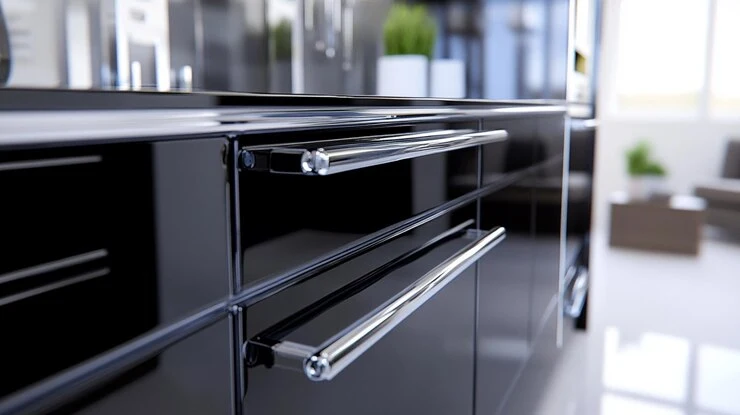
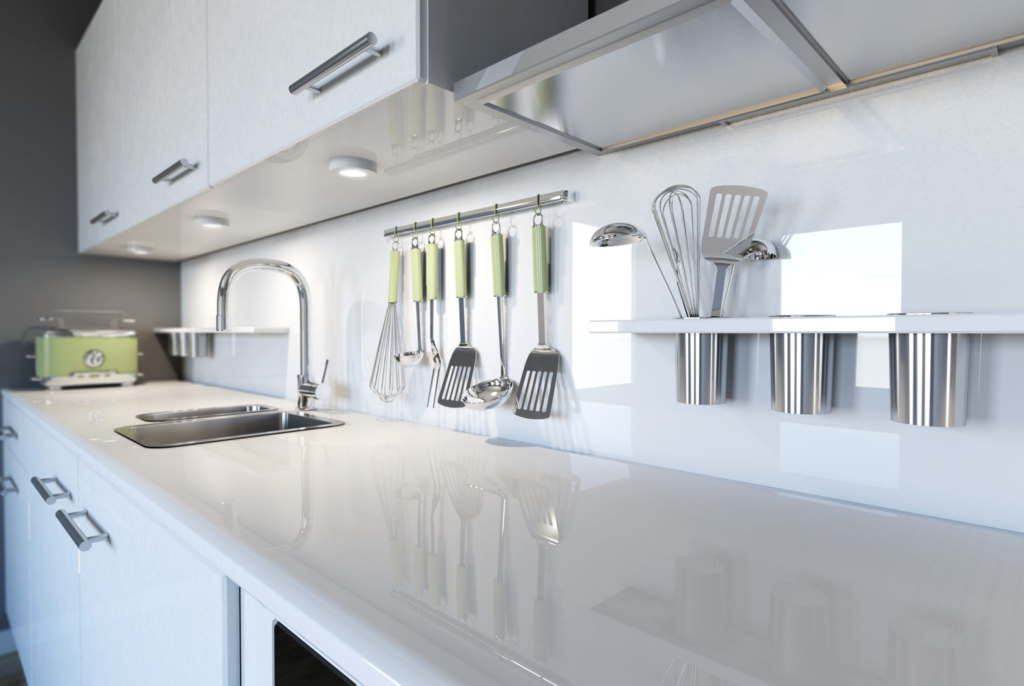
High gloss surfaces are unforgiving for one simple reason: they are completely reflective. On a matte surface, light scatters small smears, streaks, and residues are absorbed visually into the texture. On a gloss surface, light bounces directly off every mark, streak, and finger touch is visible from across the room.
The three main problems people have with high gloss kitchen cabinets are:
Streaking after wiping. This is the most common complaint and it almost always comes from using the wrong cloth, leaving cleaning product residue on the surface, or rinsing with London’s hard tap water. When mineral rich water dries on a gloss surface, it leaves a visible white haze that looks like a streak but is actually dried calcium and magnesium deposits.
Grease build up around handles and edges. Cooking produces a fine grease mist that settles on every nearby surface. On gloss cabinets, this combines with fingerprint oils at contact points to create a sticky film that gets harder to remove the longer it is left. Standard kitchen sprays can shift fresh grease but often smear old build up rather than dissolving it the same principle behind why a full kitchen deep clean tackles grease at the source rather than just moving it around.
Yellowing on white gloss cabinets. White high gloss cabinets yellow over time from a combination of cooking fumes, UV exposure through windows, and the natural ageing of the lacquer or acrylic coating. Around handles and hinge points where cleaning is least thorough grease and product residue accumulates and darkens the surface visibly.
London’s water hardness is 300–400mg/l the highest in the UK. Every time you wipe down gloss cabinets with a cloth damp with tap water, you are depositing minerals onto that surface. This is the primary cause of the white streaky haze that London homeowners struggle with on gloss kitchen cabinets and the reason distilled water makes such a significant difference to the result.
What to Use and What to Never Use on High Gloss Kitchen Cabinets
| Product / Tool | Safe to Use? | Notes |
|---|---|---|
| White microfibre cloths | ✅ Yes essential | Lint free, non scratch. Always use two: one damp, one dry |
| Distilled water | ✅ Yes highly recommended | Leaves no mineral residue. Key to streak free results in London |
| Diluted washing up liquid (1 drop in 500ml water) | ✅ Yes for grease | Tiny amount only rinse fully with distilled water |
| Glass cleaner (IPA-based) | ✅ Yes for streak free finish | Apply to cloth, never directly to cabinet |
| White wine vinegar + distilled water (50/50) | ✅ Yes for grease and light build up | Never use undiluted can affect lacquer over time |
| Specialist gloss kitchen cleaner | ✅ Yes | Check it is specifically formulated for high gloss surfaces |
| Paper towels | ❌ No | Scratch gloss surfaces and leave lint always use microfibre |
| Abrasive scouring pads | ❌ Never | Permanently scratch the gloss finish irreversible damage |
| Bleach or bleach based cleaners | ❌ No | Strips lacquer, causes yellowing and surface damage |
| All purpose kitchen spray (full strength) | ❌ No | Most leave residue on gloss causes streaking |
| Steam cleaners directly on gloss | ❌ No | High heat can cause gloss finish to bubble or delaminate |
| Abrasive cream cleaners | ❌ Never | Even “gentle” cream cleaners scratch high gloss lacquer |
How to Clean High Gloss Kitchen Cabinets Without Streaks: The Exact Method
Follow these steps in this exact order. The sequence is what prevents streaks not just the products.
Step 1: Dust First Dry Wipe Before Any Liquid
Before any damp cloth touches your gloss cabinets, wipe them down with a dry microfibre cloth in slow, gentle strokes. This removes any loose dust, crumbs, and surface particles that would otherwise combine with your cleaning liquid to create a paste that smears across the gloss finish.
This step takes 30 seconds per cabinet door. Skip it and you will spend five minutes chasing a smear that the dry wipe would have prevented entirely.
Step 2: Damp Wipe With the Right Solution
Dampen a fresh microfibre cloth with your chosen solution either diluted washing up liquid (one drop in 500ml of distilled water), or a specialist gloss kitchen cleaner. Wring the cloth until it is barely damp, not wet. Apply to the cabinet surface in long, smooth, overlapping strokes always in the same direction, following the grain or panel direction of the door.
Work from the top of each cabinet door to the bottom. Never scrub in circular motions on a gloss surface circles trap product and create the exact swirl marks you are trying to avoid.
Pay particular attention to the area immediately around handles and hinge points this is where grease and build up concentrate. Use a clean cotton bud or the corner of the cloth for any gap between the handle and the cabinet door surface.
Step 3: Rinse Immediately With Distilled Water
This is the step that most people skip and it is the one that causes the majority of streaking on high gloss kitchen cabinets.
Take a second clean microfibre cloth, dampen it with distilled water only, and wipe each cabinet surface immediately after the cleaning step. This removes any cleaning product residue before it can dry onto the surface and leave a film.
In London, tap water contains 300–400mg/l of dissolved calcium and magnesium. Rinsing with tap water deposits these minerals onto your gloss surface as the water dries. Distilled water is mineral free it rinses the surface clean without leaving anything behind.
Step 4: Dry Immediately With a Third Clean Cloth
Do not let gloss cabinets air dry water sitting on the surface, even distilled water, can leave very faint marks if left long enough. Take a third dry microfibre cloth and wipe each surface dry immediately after the rinse, using smooth overlapping strokes in one direction.
After drying, hold a light source a phone torch or angled daylight at a low angle to the cabinet surface to check for any remaining streaks. If you see any, a single pass with a barely damp distilled water cloth followed by an immediate dry wipe will remove them.
The single most common mistake: Using the same cloth for cleaning, rinsing, and drying. Each step requires a fresh cloth. Using a cloth that already contains cleaning product residue for the dry step simply redistributes that residue across the surface creating the exact streak pattern you were trying to remove.
How to Clean White Kitchen Cabinets That Have Yellowed
Yellowing on white high gloss kitchen cabinets is one of the most frustrating kitchen cleaning problems because it looks like permanent damage even when it is not.
The cause matters for the solution. White kitchen cabinets yellow for different reasons:
Grease and cooking residue build up around handles and cooking zones this is the most common cause and is fully reversible with the right cleaning.
UV exposure through kitchen windows bleaching the lacquer slightly more difficult to reverse, but specialist products can reduce the appearance.
Cleaning product residue from the wrong cleaners (particularly bleach based products) that have reacted with the lacquer over time partially reversible with the right treatment.
For Grease Based Yellowing (Most Common)
Mix one part white wine vinegar with two parts distilled water in a spray bottle. Spray onto a microfibre cloth not directly onto the cabinet and apply to the yellowed area with gentle pressure, working in the direction of the panel. Leave for two to three minutes to allow the acidity to break down the grease and residue causing the discolouration.
Wipe clean with a fresh damp cloth, then immediately rinse with distilled water and dry. For stubborn grease yellowing around handles, a small amount of washing up liquid added to the vinegar solution improves the result. Repeat twice if needed do not use more pressure, which risks surface damage.
For Surface Level Yellowing on Lacquered Gloss
A specialist kitchen cabinet restorer formulated specifically for lacquered or acrylic high gloss surfaces can reduce or eliminate mild yellowing and restore the original whiteness. Apply to a soft cloth following the product instructions exactly. Never use any abrasive in combination with a restoring product the abrasive particles will permanently scratch the gloss before the restorer can work.
For significant yellowing that does not respond to cleaning, the cabinet surface may need professional treatment or refinishing. This is worth weighing against the cost of cabinet replacement professional refinishing of high gloss kitchen doors is significantly cheaper than new cabinets and can restore them to like new condition. If the yellowing is spread across the whole kitchen rather than isolated to a few doors, a one off deep kitchen clean from a London team is often enough to reset the surfaces before you consider refinishing.
Keeping High Gloss Kitchen Cabinets Clean: Simple Daily Habits
The best way to maintain high gloss kitchen cabinets is a short, consistent daily routine that prevents build up from ever reaching the level where intensive cleaning is needed.
- Wipe handles and door fronts daily: 30 seconds with a barely damp microfibre cloth removes the fresh fingerprint oils before they attract grease and harden. Fresh contamination wipes away instantly the same contamination left for a week requires significant effort.
- Wipe the hob surrounds after cooking: cooking generates a grease mist that lands on all nearby cabinet fronts. A quick wipe while the surface is still warm takes seconds the same grease left to cool and harden takes minutes.
- Never use the cabinet door as a hand towel: the most common cause of grease build up on kitchen cabinet fronts is hands touching the door immediately after cooking. A dedicated kitchen hand towel within arm’s reach eliminates the habit.
- Monthly deep clean: a full clean using the four step method above, including inside handles and hinge surrounds, keeps the finish consistently good.
When Your Kitchen Needs More Than a Cabinet Clean
If your kitchen cabinets are clean but your kitchen overall still does not look or feel right the worktops, hob, oven, splashback, and sink have accumulated the kind of build up that a cloth and spray cannot address it is worth considering a professional kitchen clean.
Safa Cleaning Services provides professional kitchen cleaning services across London covering everything from cabinet fronts and inside cupboards to oven deep cleaning, hob degreasing, and full kitchen sanitisation. For businesses and commercial kitchens, our specialist commercial kitchen deep clean and hygiene solutions cover TR19 extraction cleaning, grease trap maintenance, and full EHO documentation.
We also explain the difference between commercial extract cleaning vs domestic extract cleaning for kitchens where the extraction system needs attention one of the most overlooked hygiene and fire safety issues in both homes and commercial properties across London.
🍳 Professional Kitchen Cleaning in London All Boroughs Covered Safa Cleaning Services · 124 City Road, London EC1V 2NX · Gloss cabinets, ovens, hobs, and full kitchen deep cleans · Same day available Book your London kitchen clean today →
Frequently Asked Questions
What is the best way to clean high gloss kitchen cabinets?
The best method is a four step process: dry wipe with microfibre first, then damp clean with a diluted washing up liquid solution or specialist gloss cleaner on a second microfibre cloth, immediately rinse with a cloth dampened with distilled water (never tap water in London), and dry immediately with a third clean cloth. Use only soft microfibre cloths never paper towels, abrasive pads, or cream cleaners.
How do I clean gloss kitchen cabinets without leaving streaks?
Streaks on high gloss cabinets are almost always caused by one of three things: using the wrong cloth (paper towels or reused cloths with residue), not rinsing after cleaning (leaving product film on the surface), or rinsing with tap water (leaving mineral deposits as it dries). Use three separate clean microfibre cloths one for cleaning, one for rinsing with distilled water, one for drying and never let the surface air dry.
How do I clean white kitchen cabinets that have yellowed?
For grease based yellowing the most common cause mix one part white wine vinegar with two parts distilled water, apply to a microfibre cloth, and work gently into the yellowed area, leaving it for two to three minutes before wiping clean. Rinse immediately with distilled water and dry. For yellowing that does not respond to cleaning, a specialist cabinet restorer or professional kitchen clean may be needed.
Can I use bleach to clean white high gloss kitchen cabinets?
No. Bleach damages the lacquer or acrylic coating on high gloss kitchen cabinets causing surface etching, dullness, and, ironically, accelerating yellowing rather than removing it. Never use bleach, bleach based cleaners, or any abrasive product on high gloss surfaces. Diluted white wine vinegar and distilled water is a far safer and more effective alternative for whitening and degreasing.
How often should I clean high gloss kitchen cabinet fronts?
A quick daily wipe of handles and high touch areas takes 30 seconds and prevents the grease build up that makes monthly cleaning difficult. A full four step clean of all cabinet fronts is needed monthly for kitchens with regular cooking. In London kitchens where cooking is frequent and the kitchen is smaller with less ventilation, the grease mist from cooking settles faster making weekly cleaning of the fronts near the hob worthwhile.
Clean Gloss, No Streaks It Is All in the Method
High gloss kitchen cabinets are not difficult to clean. They are unforgiving of the wrong method. Get the cloth right, get the distilled water rinse right, and never skip the immediate dry and your gloss cabinets will look exactly as they should every time.
When the whole kitchen needs more than a cabinet wipe, Safa Cleaning Services covers all London boroughs with professional kitchen cleaning that goes from cabinet fronts all the way through to the oven, extractor, and every surface in between.