Your bathroom is the most hygienic critical room in your home.
It is also the room where most people clean the surface of the visible bits, while leaving the areas that actually harbour the most bacteria, mould, and limescale almost entirely untouched.
The toilet bowl gets a quick scrub. The mirror gets a wipe. The floor gets mopped. And the shower head, the grout, the extractor fan, the toilet base, the tap internals, and the seal around the bath? Left for another day until that day becomes months.
This changes that. It gives you the exact, step by step method for how to Deep Clean a Bathroom in London properly, the system that professional cleaning teams at Safa Cleaning Services use across London homes every day. You will learn which bathroom cleaning tips actually make a difference, the correct order to tackle every surface, and how to resolve the specific bathroom cleaning and hygiene challenges that London properties face.
Whether you are doing this yourself or deciding whether to call a professional Bathroom deep clean service near you, we provide everything you need.
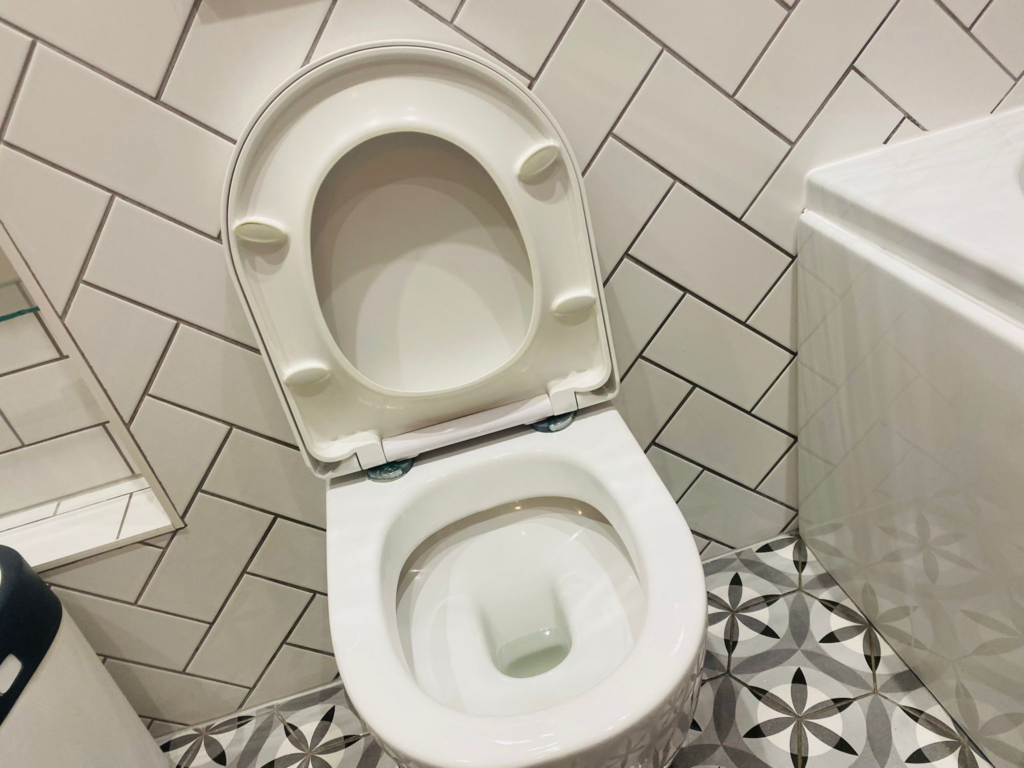
Why Bathroom Deep Cleaning Is Harder in London
London bathrooms face cleaning challenges that do not exist in most other UK cities and understanding them is the first step to cleaning a bathroom properly here.
London hard water is the biggest factor. With a water hardness rating of 300–400mg/l calcium carbonate the highest in the UK London tap water leaves visible limescale deposits on every fixture it touches within days of cleaning. Shower screens, taps, toilet bowls, and shower heads accumulate mineral build up at a rate that requires specific treatment, not just regular wiping.
Mould is endemic in London bathrooms. The combination of older housing stock, dense urban living, smaller room sizes, and inadequate ventilation in many London flats creates ideal conditions for black mould in bathroom grout, ceiling corners, window frames, and behind the toilet. Standard bathroom sprays do not kill mould at root level they just bleach the colour, and the mould returns within weeks.
Ventilation is often poor. Many London bathrooms particularly in converted Victorian and Edwardian houses have either no window or a small frosted window that never opens fully. Without adequate ventilation after bathing or showering, moisture lingers, surfaces stay damp, and bacteria and mould thrive faster than any cleaning routine can keep up with.
The bathroom cleaning and hygiene approach in this guide specifically addresses these London challenges not just the general deep cleaning principles that apply anywhere.
What You Need Before You Start: The Bathroom Deep Clean Kit
You do not need a different product for every surface. Professional cleaners tackle a full bathroom deep clean with a focused, minimal kit. Here is exactly what you need:
| Product / Tool | Purpose | Key Notes |
| Bathroom cleaner / spray | General surfaces, tiles, bath, sink | pH neutral, safe on grout |
| Citric acid solution | Limescale on taps, shower screen, toilet | Essential for London hard water |
| White vinegar | Shower head descale, grout treatment | Fill a bag, soak overnight |
| Toilet cleaner | Inside toilet bowl under rim | Leave minimum 15 mins |
| Bicarbonate of soda | Grout scrub paste, deodoriser, mould prep | Mixed with water or vinegar |
| Antibacterial disinfectant | Toilet outside, door handle, light switch | BS EN 1276 certified ideally |
| Glass cleaner | Mirror and shower screen | IPA-based for streak free |
| Grout cleaner or brush | Scrubbing grout lines | Stiff bristled grout brush |
| Microfibre cloths x4 | All surfaces colour code if possible | Blue: surfaces, Red: toilet |
| Rubber gloves | Hand protection throughout | Essential for chemical safety |
| Old toothbrush | Tap bases, grout detail, toilet rim detail | Reaches what cloths cannot |
Safety First: Always wear rubber gloves when deep cleaning a bathroom. Never mix bleach based products with acidic cleaners (citric acid, vinegar) this releases chlorine gas. Use one type of product at a time, rinse thoroughly between different product types, and ventilate the room fully throughout.
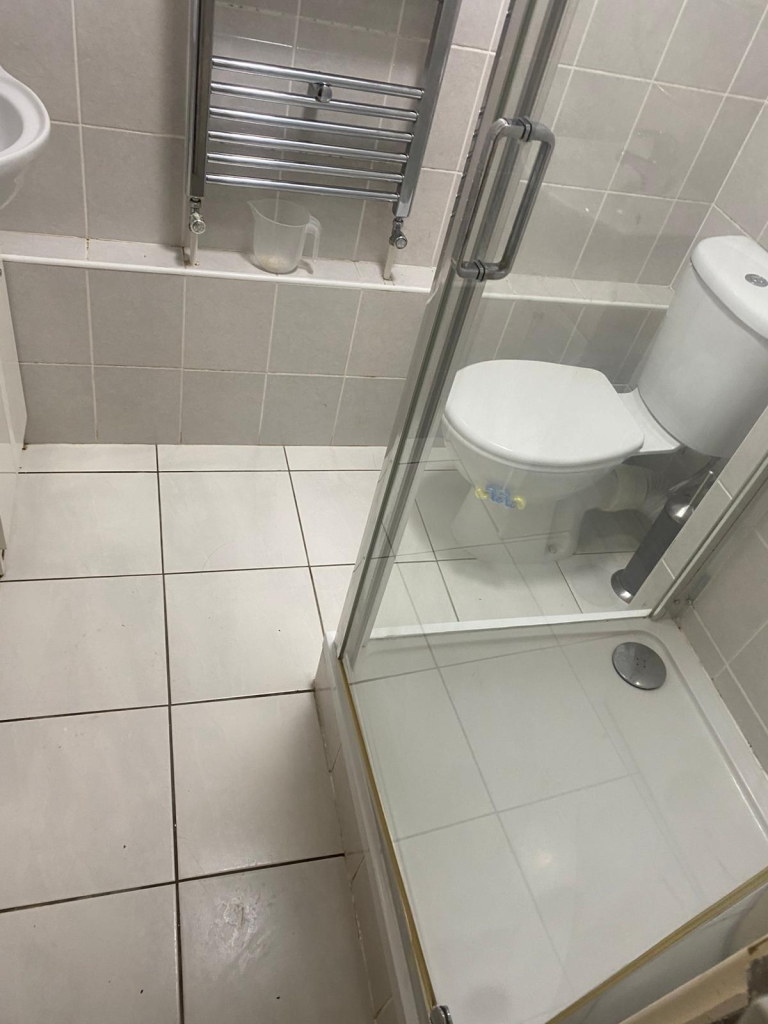
How to Deep Clean a Bathroom Step by Step
The single most important rule in deep cleaning a bathroom is: apply products and let them work before you scrub. This is what separates a professional bathroom deep clean from an exhausting hour of scrubbing with mediocre results. Dwell time does most of the work you just need to apply correctly and wipe at the right moment.
Follow these steps in this exact order. The sequence is deliberate products are applied first so they soak while you work on other areas. Nothing is cleaned twice, and no surface is missed.
STEP 1 DECLUTTER AND PREPARE
Remove everything from the bathroom toiletries from the shower, items from window sills, everything from around the sink and toilet. You cannot deep clean surfaces you cannot reach. Lay everything outside the bathroom door. This step also helps you identify products that are empty, expired, or that you no longer use.
STEP 2 APPLY PRODUCTS WITH DWELL TIME BEFORE ANYTHING ELSE
Apply your cleaning products to the areas that need the most dwell time first, then move on while they soak: Toilet bowl: Apply toilet cleaner under the rim and around the bowl. Leave for minimum 15–20 minutes. Shower screen or bath: Spray with citric acid solution or bathroom cleaner. Leave for 10–15 minutes. Shower head: If descaling, submerge in a bowl or bag of white vinegar or citric acid solution. For overnight soaking, this produces remarkable results on London hard water build up. See our full guide on removing limescale from London homes for complete instructions. Grout: Apply bicarbonate paste or grout cleaner to heavily discoloured lines. Leave for 5–10 minutes.
STEP 3 DUST AND SWEEP TOP TO BOTTOM
While your products soak, start your dry work from the top of the room downward. Extractor fan cover: Remove and dust thoroughly a blocked extractor fan is the single biggest cause of bathroom mould in London properties and is rarely cleaned. Ceiling corners: Check for mould in ceiling wall joints extremely common in London bathrooms with condensation issues. Light fitting: Dust carefully. Shelves and cabinet tops: Wipe down with a dry microfibre cloth. Everything falls downward floor always last.
STEP 4 CLEAN THE MIRROR AND GLASS SURFACES
Spray a small amount of glass cleaner onto a clean dry microfibre cloth not directly onto the mirror. Wipe in a single overlapping S-pattern from top to bottom, then a final buff with a dry cloth. London’s hard water leaves mineral spotting on glass within days this technique gives a streak free result that lasts longer than circular wiping. Shower screen: The citric acid spray applied in Step 2 should now have worked on the soap scum and limescale. Scrub with a non scratch pad, rinse thoroughly, and buff dry with a clean microfibre cloth. A weekly squeegee of the shower screen after every shower prevents 90% of the build up that requires this effort.
STEP 5 CLEAN THE SHOWER OR BATH
Shower tray or bath: The cleaner applied in Step 2 should have loosened the soap scum and surface grime. Scrub with a non scratch pad. Pay particular attention to the drain surround the black ring around the drain is mould, not staining, and requires a dedicated scrub with a grout brush or old toothbrush.
Taps and fixtures: Use a citric acid soaked cloth wrapped around the tap base for 10 minutes to dissolve limescale completely. An old toothbrush reaches the joint between the tap base and the surface where mineral deposits accumulate invisibly. Grout: The grout cleaner applied in Step 2 is ready to scrub. Use a stiff grout brush in back and forth strokes along each line. Rinse thoroughly. Shower grout that has not been deep cleaned in over a year will show a dramatic improvement with this method.
STEP 6 CLEAN THE TOILET PROPERLY
The toilet requires a specific order: outside before inside, top before bottom. Outside surfaces: Cistern top and sides, the toilet seat (top and underside one of the most neglected surfaces in any bathroom), the toilet lid (top and underside), the toilet body, and the base particularly the area where the toilet meets the floor. Use an antibacterial spray and a dedicated red microfibre cloth.
Behind the toilet: Clean the wall and floor behind and around the toilet base. This is the highest bacteria density surface in the entire bathroom and is almost universally missed in a standard clean. Inside the bowl: The toilet cleaner applied in Step 2 has been soaking for 15–20 minutes. Scrub with the toilet brush, paying particular attention to under the rim where bacteria and limescale accumulate invisibly. Flush. Apply a second treatment if London limescale has caused significant discolouration at the waterline.
STEP 7 CLEAN THE SINK, BASIN, AND TAPS
Sink basin: Spray with bathroom cleaner and scrub. Pay attention to the area under the tap overhang bacteria and toothpaste residue accumulate here daily and are missed by surface wiping. Plughole: Remove the plug and clean the plughole surround. Hair and soap residue collect here and are one of the most common causes of slow bathroom drains. Taps: Citric acid wrap for limescale, as described in Step 5. Dry and buff chrome taps to a shine with a dry microfibre cloth London hard water causes water spotting on chrome within hours of cleaning if not dried properly. Under the sink rim: Wipe the underside of the basin rim a rarely cleaned area that harbours significant bacteria build up.
STEP 8 SCRUB THE TILES AND WALLS
Working section by section, spray each tiled area with bathroom cleaner and wipe down with a microfibre cloth. For textured tiles common in London’s older bathroom renovations a soft brush removes grime from the texture that a cloth cannot reach.
Grout deep clean: Work back through the shower and bath areas with the grout brush now that the cleaner has had its full dwell time. Clean grout lines are the visual indicator of a properly deep cleaned bathroom more than any other single element. Ceiling tiles or painted ceiling: Wipe carefully with a lightly damp cloth. Check for mould particularly in corners and along the ceiling wall joint above the shower. Mould here indicates a ventilation problem that no amount of cleaning will permanently solve without addressing the root cause.
STEP 9 CLEAN SURFACES, SHELVES, AND STORAGE
Wipe all surfaces, shelves, and bathroom cabinet interiors with a damp antibacterial cloth. Clean the cabinet mirror inside and out. Wipe all toiletry bottles before returning them to their places soap and shampoo bottles develop a sticky residue on the base that transfers onto shelves. Light switch and door handle: Wipe with an antibacterial cloth two of the most touched surfaces in the room.
STEP 10 FLOOR ALWAYS LAST
Sweep or vacuum first bathroom floors collect hair and dust that turns to paste when mopped wet. Mop with a suitable floor cleaner diluted correctly too much product leaves a sticky residue that attracts more dirt. Focus on the toilet base area: Mop the area around and behind the toilet with particular care this area has the highest bacterial load on any bathroom floor.
Grout between floor tiles: London bathroom floor grout discolours with moisture and foot traffic. A grout brush with a bicarbonate paste during your deep clean, followed by thorough rinsing, restores significant brightness. Ventilate: Open the window fully and leave the bathroom door open after cleaning. Allow the room to dry and air for at least 20–30 minutes before putting items back.
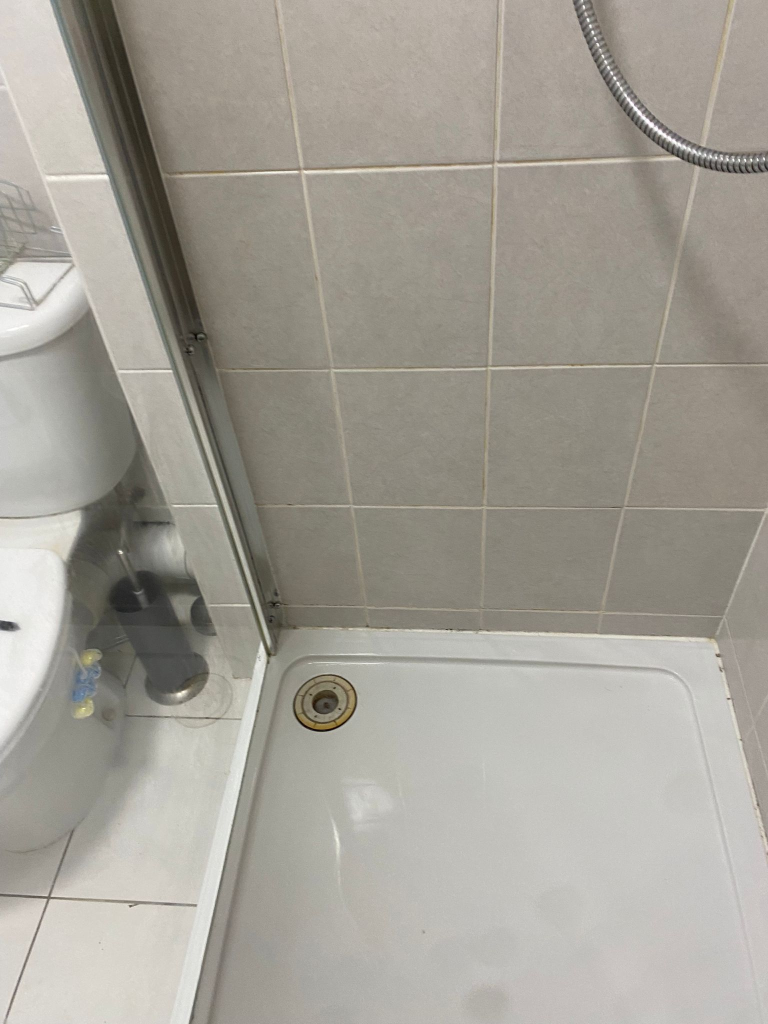
London Specific Bathroom Problems and How to Solve Them
Problem: Persistent Limescale on Everything
London water hardness means limescale is a weekly presence, not an occasional problem. The only solution is regular citric acid treatment not scrubbing, and not commercial limescale removers that damage chrome and ceramic over time. Apply citric acid solution to taps and shower screens weekly. For severe toilet bowl limescale, a dedicated citric acid toilet treatment left overnight produces results that nothing else achieves. Our comprehensive guide on removing limescale from London homes covers every fixture and method in full detail.
Problem: Black Mould Keeps Coming Back
If you are treating black mould with bleach and it returns within two to four weeks, the bleach is not working it is only removing the colour. Mould roots survive in porous grout and plaster and regrow from the same point. The professional solution is a dedicated fungicidal treatment applied to clean, dry surfaces and left to penetrate fully before rinsing. Addressing the ventilation issue cleaning or upgrading the extractor fan, improving airflow is the only long term prevention strategy.
Problem: Soap Scum on Shower Screens That Refuses to Shift
London soap scum is a combination of soap residue and calcium from hard water a harder deposit than either alone. The professional method is citric acid spray with a minimum 15-minute dwell, followed by a plastic scraper to lift the deposit, then a non scratch pad to finish. A daily squeegee after every shower prevents 90% of this build up from forming.
Problem: Bathroom Smells That Don’t Go Away
Persistent bathroom odours almost always come from one of three sources: the drains (hair and soap residue), the toilet base seal (bacteria from splashing), or mould behind fixtures. Address each specifically: a drain cleaner and plughole brush for drains; thorough disinfection of the floor area around the toilet base; and a proper mould treatment rather than surface cleaning for mould sources. Bicarbonate of soda sprinkled and left for 30 minutes before vacuuming works as a surface deodoriser on any soft element.
Bathroom Cleaning Schedule: How Often to Do Each Task
| Bathroom Task | Frequency | Why This Often |
| Shower screen squeegee | After every shower | Prevents limescale & soap scum |
| Sink and tap wipe | Daily or every 2 days | Toothpaste & soap residue |
| Toilet bowl clean | Twice weekly | Bacteria growth rate |
| Full surface wipe (tiles, bath) | Weekly | Soap scum & bacteria |
| Mirror clean | Weekly | Toothpaste splatter |
| Floor mop | Weekly | Hair & moisture |
| Tap descale (citric acid) | Weekly London | Hard water deposits |
| Shower head descale | Monthly London | Internal mineral build up |
| Grout scrub | Monthly | Mould and soap build up |
| Extractor fan clean | Every 2–3 months | Dust blockage causes mould |
| Full bathroom deep clean | Every 3–6 months | Comprehensive hygiene reset |
| Professional deep clean | Annually or as needed | Areas beyond DIY reach |
For a complete room by room deep clean schedule for your whole London home, read our full deep house cleaning checklist covering every room with the same level of detail as this bathroom guide.
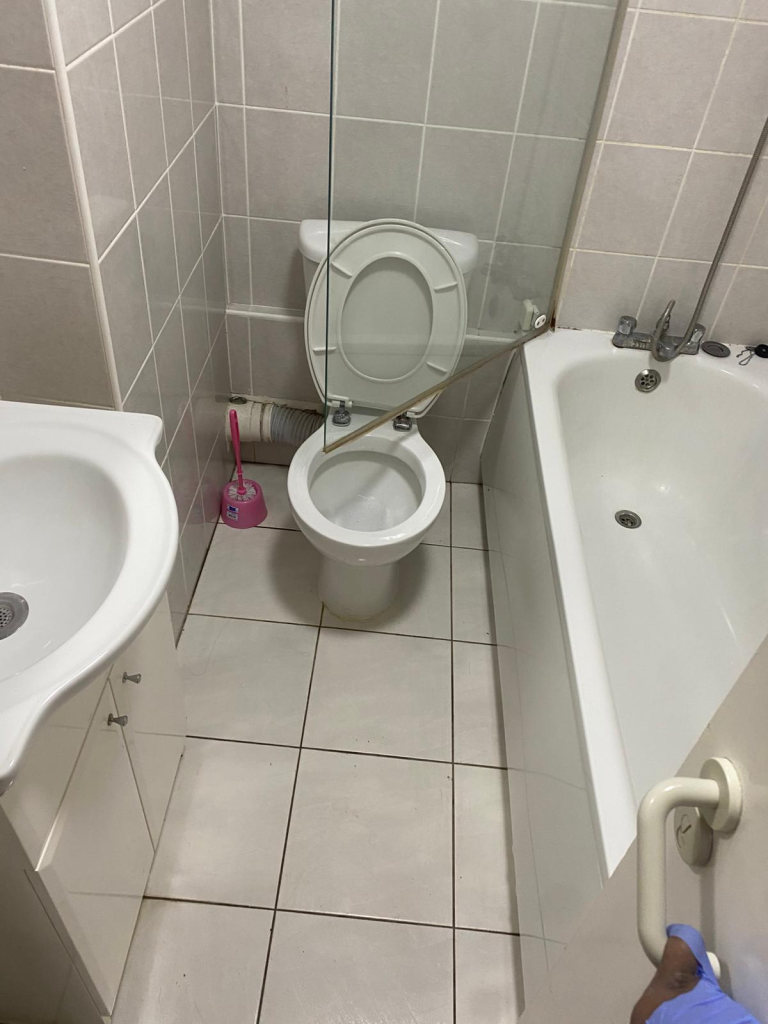
Bathroom Hygiene Facts That Will Change How You Clean
Understanding bathroom hygiene at a deeper level changes which tasks you prioritise and explains why some surfaces matter far more than they look.
The toilet flush creates an aerosol. Every flush without the lid closed disperses a fine aerosol of water droplets containing faecal bacteria up to 1.5 metres from the toilet. Toothbrushes left on the bathroom shelf are in range. Always flush with the lid closed one of the simplest and most impactful bathroom cleaning and hygiene habits available.
Bathroom door handles carry more bacteria than toilet seats. Research consistently shows that door handles and light switches in bathrooms touched by everyone after using the toilet carry higher bacterial loads than the toilet seat itself, which is typically disinfected more frequently. Include these in every bathroom clean.
Bath towels harbour bacteria after 3 uses. A damp towel in a London bathroom provides ideal conditions for bacterial growth. Wash bath towels at 60°C not 40°C every two to three uses. Allow them to dry fully between uses rather than leaving them bunched or folded while damp.
Grout is porous cleaning the surface is not enough. Tile grout is a porous material that absorbs moisture, soap, and bacteria deep into its structure. The discolouration you see on old grout is primarily mould and bacteria, not just dirt. Sealing clean grout with a specialist grout sealer after a deep clean significantly reduces absorption and makes all future bathroom cleaning faster and more effective.
When to Call a Professional Bathroom Deep Cleaning Service in London
Some bathroom cleaning situations require professional equipment, products, and expertise that go beyond what any DIY approach can achieve regardless of how much effort is applied.
Severe limescale build up. When limescale on a toilet bowl, shower tray, or bath has been left for years as is common in London properties changing tenants professional grade descaling products and equipment remove it completely without damaging the underlying ceramic or enamel. Attempting this with consumer products and excessive scrubbing risks surface damage.
End of tenancy bathroom standard. London letting agents and landlords inspect bathrooms to a very specific standard at the end of a tenancy. Grout colour, limescale presence, shower screen condition, and toilet cleanliness are all checked against inventory photographs. A professional bathroom deep clean before checkout gives you the best possible chance of a full deposit return.
Persistent mould that returns after treatment. If black mould returns within a few weeks of treatment, the mould colony has penetrated into the substrate plaster, grout, or sealant beyond the reach of surface cleaning products. Professional treatment with penetrating fungicidal products, and in some cases replacement of affected grout or sealant, is the correct solution.
Post renovation bathroom cleaning. Building dust and debris from bathroom renovation is extremely fine and penetrates into every surface. Professional post renovation cleaning removes this completely without spreading it through the rest of the property.
Safa Cleaning Services provides specialist bathroom deep cleaning services across London covering all boroughs with fully insured, professional teams. We also provide full residential cleaning services in London if you need the whole property professionally cleaned. Explore our complete London cleaning services guide to find the right service for your needs.
✨ Book a Professional Bathroom Deep Clean in London Today Safa Cleaning Services covers every London borough. Certified products. Guaranteed results. Fully insured. Get your free quote → | or visit safacleaningservices.com
Frequently Asked Questions
Q: What is the correct order to deep clean a bathroom?
Always work top to bottom and apply products before scrubbing. The correct order is: declutter, apply dwell time products (toilet, shower, grout), dust from top down, clean mirror and glass, clean shower or bath, clean toilet outside then inside, clean sink and taps, scrub tiles and grout, clean surfaces and storage, then floor last. This sequence ensures every minute of cleaning counts and no surface is cleaned twice.
Q: How long does it take to deep clean a bathroom?
A thorough bathroom deep clean for a standard London bathroom takes 1.5–3 hours, depending on the level of limescale, mould, and build up present. A bathroom that has not been deep cleaned for 6+ months or a bathroom in a London tenancy changeover typically requires 2.5–3 hours to complete properly.
Q: How do you remove limescale from a London bathroom?
Citric acid solution is the most effective and safest limescale remover for London bathrooms. Wrap taps and showerheads in citric acid soaked cloths for 20–60 minutes depending on severity. Apply to toilet bowls and leave for 30+ minutes. For shower screens, spray and leave for 15 minutes then scrub and rinse. See our complete guide on limescale removal for London homes.
Q: How do I deep clean bathroom grout?
Apply a bicarbonate of soda paste or specialist grout cleaner to the grout lines. Leave for 5–15 minutes depending on severity. Scrub with a stiff grout brush in back and forth strokes. Rinse thoroughly. For very dark or persistent mould in grout, a fungicidal treatment is more effective than bicarbonate. Finish with a grout sealer to slow future discolouration.
Q: How do you descale a shower head?
Fill a plastic bag with white vinegar or citric acid solution and secure it around the shower head so the head is fully submerged. For light London limescale, 30 minutes is sufficient. For heavy build up, leave overnight. The internal mineral deposits that reduce water flow dissolve completely. This is the most effective bathroom cleaning tip for London’s hard water.
Q: What bathroom cleaning products should I use for deep cleaning?
You need: a citric acid limescale remover, a pH neutral bathroom cleaner, a grout brush and bicarbonate paste, toilet cleaner, antibacterial spray, glass cleaner, and quality microfibre cloths. Avoid mixing bleach based products with acid based products this releases chlorine gas. Never use abrasive scourers on chrome or enamel they cause permanent scratching.
Q: How do I prevent black mould in my London bathroom?
Three things prevent bathroom mould: ventilation, drying, and regular treatment. Run the extractor fan during and for 15 minutes after every shower. Squeegee the shower screen after every use. Leave the bathroom door open after bathing. Monthly application of a diluted white vinegar spray to grout and ceiling corners inhibits mould regrowth significantly.
Q: Is it better to deep clean a bathroom yourself or hire a professional?
For routine maintenance and regular deep cleans, DIY using the method in this guide produces excellent results. Professional bathroom deep cleaning is the better choice for end of tenancy standards, severe limescale or mould that has built up over years, post renovation cleaning, or households where hygiene needs require certified antibacterial treatment rather than consumer products.
Q: How do I clean bathroom tiles properly?
Spray tiles with a pH neutral bathroom cleaner and wipe with a microfibre cloth in overlapping sections. For textured tiles, use a soft brush. Rinse with clean water and buff dry to prevent water spotting. For grout between tiles, use a dedicated grout cleaner or bicarbonate paste with a grout brush. Deep clean tile grout every 1–3 months to prevent mould and discolouration from setting in.
Q: How do I book a professional bathroom deep clean in London?
Simply contact Safa Cleaning Services. We provide specialist bathroom deep cleaning across London all boroughs, transparent pricing, fully insured professional teams. Visit safacleaningservices.com to explore our full range of London cleaning services.
Your Bathroom Deserves a Real Deep Clean Here Is How to Give It One
A genuinely Bathroom deep clean service near me is not just visually clean, it is hygienically clean. Grout that is free of mould. A shower head that delivers full flow. Taps without limescale build up. A toilet that is disinfected on every surface, not just the bowl. A streak free mirror. A floor that is clean around the toilet, not just in the middle.
The step by step method in this guide gives you everything you need to achieve that standard yourself. And when the job requires professional equipment, certified products, or simply a standard that goes beyond what a day’s DIY can deliver, Safa Cleaning Services is here covering every London borough with specialist bathroom deep cleaning that produces results that last.