There is a stain on your carpet that has been there for a while.
Maybe you know exactly what caused it: a glass of red wine, a pet accident, a muddy boot on a rainy London evening. Or maybe you moved into the property and it was already there, sitting in the corner, a mystery left by whoever lived there before you.
Either way, you have probably already tried something. A spray from the supermarket. Baking soda. Warm water. Cold water. And the stain is still there, maybe lighter, maybe darker, maybe spread into a slightly larger ring than it was before you started.
what actually works for old, set carpet stains specifically, and How to Clean Old Stained Carpet not fresh ones. Old stains behave completely differently from fresh spills and need a completely different approach. The wrong method on an old stain does not just fail to remove it, it can set it permanently or make it significantly harder to treat professionally afterwards.
We cover every common stain type, the correct chemistry for each one, the best carpet stain removers for old marks, and the London-specific reason that brown stains appear on carpets after cleaning a problem that confuses thousands of London homeowners every year.
72 hrs how long it takes for most carpet stains to fully set into the fibre structure after this point, professional chemistry is usually needed
80% of old carpet stains can still be significantly improved with the correct treatment even if home products have failed
300–400 mg/l London water hardness. The mineral content in London tap water causes brown staining after carpet cleaning a London specific problem no generic guide addresses
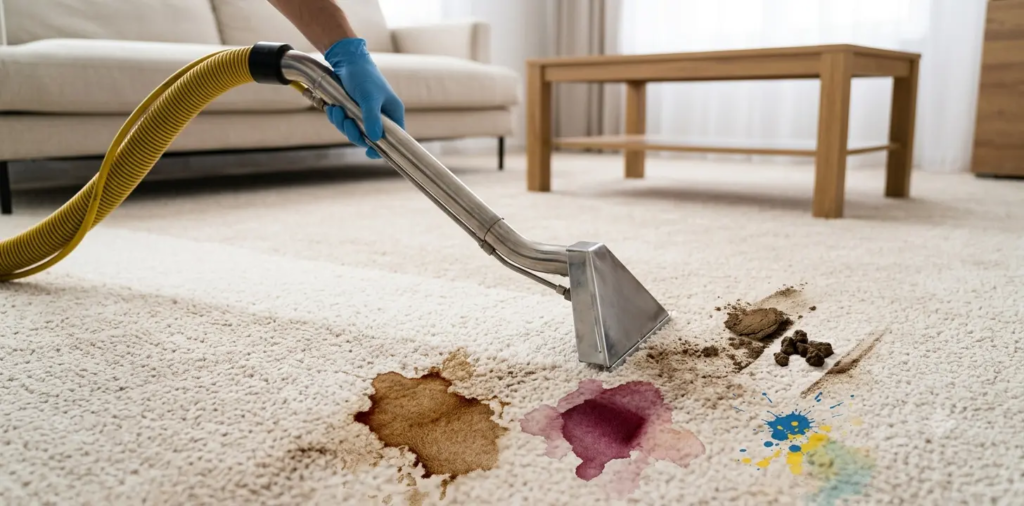
1. Why and How to Clean Old Stained Carpet So Much Harder to Remove
Fresh stains and old stains are completely different problems. Understanding why old stains resist normal cleaning is the first step to actually removing them.
When a substance lands on carpet and is not treated immediately, several things happen over the next 24 to 72 hours. The liquid component evaporates, leaving the solids behind concentrated and compressed deep into the carpet pile and sometimes into the backing below. Protein stains (blood, dairy, food) bond with the carpet fibres through a chemical process that heat and most standard cleaners cannot reverse. Oil and grease stains oxidise, which is why an old chip oil stain looks brown rather than clear. Tannin stains (tea, coffee, wine) darken as the tannin compounds concentrate and bind to the fibres.
Here is what that means in practice: the treatment that would have removed the stain in the first five minutes of cold water and blotting will not touch it six months later. Old stains need targeted chemistry matched to the specific stain compound, applied with the correct dwell time, before any physical cleaning action begins.
This is also why most supermarket carpet sprays fail on old stains. They are formulated for fresh contamination. The active ingredients break down surface level staining but cannot penetrate the dried, concentrated, chemically bonded compounds in an old stain. You need a product specifically designed to work on dried and set contamination or a professional carpet cleaning service with the equipment and chemistry to address it properly.
The mistake that makes old stains worse: Scrubbing an old stain vigorously which most people instinctively do when a product is not working. Scrubbing forces the dried compound deeper into the carpet backing and frays the fibres, making the affected area larger and creating a worn patch that cannot be repaired. Always blot. Always work from the outside edge of the stain inward.
2. How to Get Old Stains Out of Carpet: By Stain Type
Every old stain needs a different chemical approach. Here is the correct method for each common stain type found in London homes from Victorian terraces in Hackney to modern flats in Canary Wharf.
Old Tea and Coffee Stains (Tannin Stains)
Tea and coffee are tannin based stains that darken over time as the tannin compounds oxidise. Standard water based cleaners do not dissolve old tannin effectively.
Method: Mix one tablespoon of white wine vinegar with one tablespoon of washing-up liquid and two cups of warm water. Apply to a white cloth and blot from outside in leave for five minutes. The acidity in the vinegar helps dissolve the tannin bond. Blot with a clean damp cloth. For stubborn old coffee stains, a small amount of hydrogen peroxide (3% from a pharmacy) applied to a cloth and left for ten minutes before blotting significantly improves the result on light coloured carpets.
What not to do: Hot water sets tannin permanently. Rubbing it spreads and embeds the stain further.
Old Red Wine Stains
Old red wine is one of the most searched carpet stain problems and one of the most treatable when the right approach is used, even on stains that have been there for months.
Method: Make a paste of bicarbonate of soda and a small amount of cold water. Apply to the stain and leave to dry completely; this can take several hours. Once dry, vacuum the powder off. The bicarbonate draws the tannin and anthocyanin (red wine pigment) toward the surface as it dries. Follow with a solution of one part washing up liquid and two parts cold water, blotting carefully. For persistent colour, hydrogen peroxide (3%) applied and left for 20 minutes before blotting can lift remaining pigment from light coloured carpets. Always test on a hidden area first.
Old Brown Stains (Unknown Origin)
Brown stains of unknown origin on carpet are one of the most common questions from London homeowners and they usually come from one of three sources: old tea or coffee, oxidised food oil, or dried urine (which turns brown as the uric acid compounds age). Each needs a slightly different approach.
For oxidised oil and food brown stains: Sprinkle bicarbonate of soda generously onto the stain. Leave for 30 minutes to absorb surface oils. Vacuum off. Then apply a small amount of washing up liquid directly to the stain; its degreasing surfactants work specifically on oil and fat compounds. Leave for five minutes, blot with cold water.
For old urine brown stains: This requires an enzyme based cleaner specifically. Standard cleaners do not break down the uric acid crystals in aged urine; they only address the colour and surface contamination. An enzyme cleaner dissolves the uric acid compound itself, eliminating both the stain and the odour permanently. Apply, leave for 20 to 30 minutes, then blot. Do not rush this; the enzyme needs time to work.
Old Pet Stains and Odour
Pet stains that have been there for a while present a two part problem: the visible stain and the odour that returns every time the carpet warms up. Both need addressing separately.
Method: Enzyme based pet stain remover is essential, not optional for old pet stains. Apply generously to the full area of the original accident (which is often larger than the visible stain, because urine spreads under the carpet surface). Cover with a damp cloth and leave for 30 to 60 minutes. The enzyme needs warmth and moisture to activate fully. Blot completely dry. For the odour, once the area is clean and dry, sprinkle bicarbonate of soda generously, leave overnight, and vacuum off in the morning.
London note: London’s smaller, less ventilated properties mean pet odours from carpet stains accumulate faster here than in larger homes. If the odour is coming back through the floor (not just the carpet surface), the underlay or floorboard beneath may also need treatment.
Old Blood Stains
Blood is a protein stain. Cold water is essential hot water permanently bonds the protein to the fibre. This is the most important rule for blood stains at any age.
Method: Mix one teaspoon of salt in two cups of cold water. Apply to the stain and leave for 10 minutes. Blot from outside in. For old, dried blood that has not responded to the salt solution, a small amount of hydrogen peroxide (3%) applied carefully and left for five to ten minutes before blotting can lift the oxidised haemoglobin. Test on a hidden area first hydrogen peroxide can lighten carpet colour on very dark carpets.
Old Mud and Dirt (Brown Ground In Stains)
This is the most common carpet stain in London homes particularly in hallways and near doorways where damp, clay rich London soil gets walked in on shoes.
The critical rule: let mud dry completely before cleaning. Cleaning wet mud pushes it deeper into the pile. Once completely dry, vacuum the dried mud out first multiple slow overlapping passes. Then dampen the area with cold water and blot. A washing up liquid solution applied to any remaining mark and blotted out completes the treatment for most mud stains. For ground in mud that has been there for months, the same approach works. The drying and vacuuming step is what a rushed fresh mud clean skips, which is why old mud often looks worse than new mud.
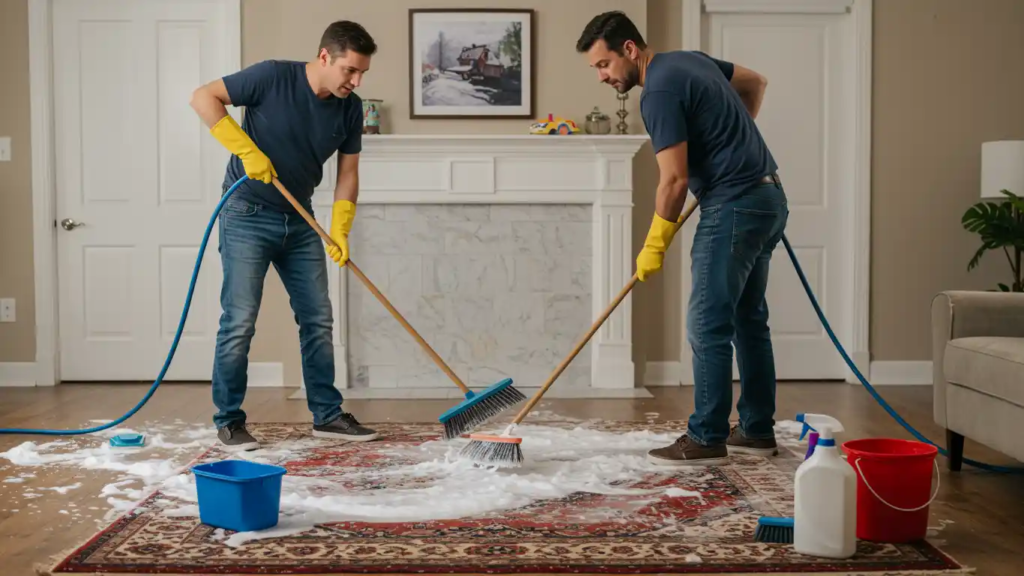
3. Baking Soda and Vinegar on Old Carpet Stains What Actually Works
Baking soda and vinegar is the most searched DIY carpet stain removal combination online. Here is the honest answer about when it works and when it does not.
What baking soda does: bicarbonate of soda is a mild alkaline abrasive and an effective odour absorber. It draws liquid and dissolved compounds toward the surface as it dries, and it neutralises acidic odour compounds. It works well as a deodoriser and as a drawing agent for surface level contamination.
What vinegar does: white wine vinegar is mildly acidic and works well on tannin based stains (tea, coffee, some food stains) by helping dissolve the tannin bond. It also helps neutralise alkaline residues from other cleaning products.
The truth about mixing them together: baking soda and vinegar mixed together neutralise each other. The acid and alkali cancel out, producing water, carbon dioxide bubbles, and sodium acetate. The bubbling looks impressive but the cleaning effect is minimal. Use them separately, in sequence, not mixed together. Baking soda first to draw and deodorise vacuum off then diluted vinegar solution to treat the tannin stain.
For old stains specifically: this combination is most effective on tannin stains (tea, coffee, wine) on light coloured carpets. It is less effective on protein stains (blood, dairy, egg), oil-based stains, and urine. For these, the wrong home treatment can make professional removal significantly harder.
4. Why Brown Stains Appear on Carpet After Cleaning and How to Fix Them
This is one of the most confusing carpet problems London homeowners face when you clean the carpet, it looks fine, it dries, and then a brown stain appears where there was not one before. Or an existing stain looks worse after cleaning than it did before.
There are two causes, and understanding which one applies to you determines the fix.
Cause 1: Wicking The Most Common Reason
Wicking happens when the carpet was cleaned with too much water. The excess moisture soaks down through the pile into the carpet backing and underlay, dissolving old staining that was sitting in the base of the carpet staining that you never even knew was there. As the carpet dries from the top, that dissolved old stain is pulled back up through the pile by capillary action and deposits itself on the surface as the moisture evaporates. The result is a brown mark that appears on a clean carpet.
How to fix wicking: wait until the carpet is completely dry. Then apply a small amount of diluted washing up liquid solution to the wicked mark, blot gently, and rinse with the minimum possible amount of cold water. Blot completely dry with a clean white towel immediately so you do not let any moisture sit. The key is to treat it while using as little liquid as possible.
How to prevent wicking: use minimum moisture in any carpet cleaning. Rented carpet cleaning machines in London are particularly prone to causing wicking because they inject more water than they extract effectively. Professional carpet cleaning equipment which extracts up to 95% of injected moisture prevents wicking almost entirely.
Cause 2: London Hard Water Mineral Residue
London’s water hardness (300–400mg/l of dissolved calcium and magnesium) means that cleaning carpets with London tap water leaves mineral deposits in the carpet fibres as the water dries. These deposits can appear as a light brown or yellowish haze particularly visible on pale coloured carpets and can make a cleaned carpet look worse than it did before cleaning.
How to fix hard water staining: rinse the affected area with distilled water (not tap water) applied to a cloth and blotted through never poured. The distilled water has no minerals to deposit and helps flush out the residue from the London tap water. Blot completely dry immediately afterwards.
For the full professional approach to carpet stain removal in London homes including old stains that home products have failed to read our complete guide on how to remove old stains from carpet in London.
5. Best Carpet Stain Remover for Old Stains What the Professionals Use
Here is the honest breakdown of what works by product type for old carpet stains specifically.
| Product Type | Best For | Not Suitable For | Key Notes |
| Enzyme based cleaner | Old pet stains, urine, food, blood | Oil-based stains | Must be left 20–30 mins to work. The only product that removes old urine odour permanently |
| Hydrogen peroxide 3% | Old tannin stains, wine, tea on light carpets | Dark or dyed carpets | Testing the hidden area first can lighten carpet colour. Available at pharmacies |
| Diluted white wine vinegar | Tea, coffee, tannin stains, neutralising residues | Oil, grease, urine | 1:2 vinegar to water ratio. Never use undiluted on carpet |
| Washing-up liquid solution | Oil, grease, general food stains | Heavy staining alone | 1 drop in 500ml cold water. Rinse fully to avoid residue attracting dirt |
| Bicarbonate of soda | Deodourising, drawing out moisture, mild stains | Protein stains alone | Use dry leave 30–60 mins then vacuum. Do not mix with vinegar |
| Isopropyl alcohol (IPA) | Ink, pen, marker stains | Pet stains, food stains | Apply to cloth never directly to carpet. Blot from outside in |
| Specialist carpet stain remover | Multiple old stain types | N/A | Look for enzyme-based formulas for old stains. Dwell time critical |
The one product type that genuinely outperforms everything else on old, set carpet stains is an enzyme based cleaner applied with adequate dwell time. Enzymes break down the organic compounds in stains at a molecular level which is why they are the only products that permanently remove old urine odour and consistently improve old food and drink stains where other products fail.
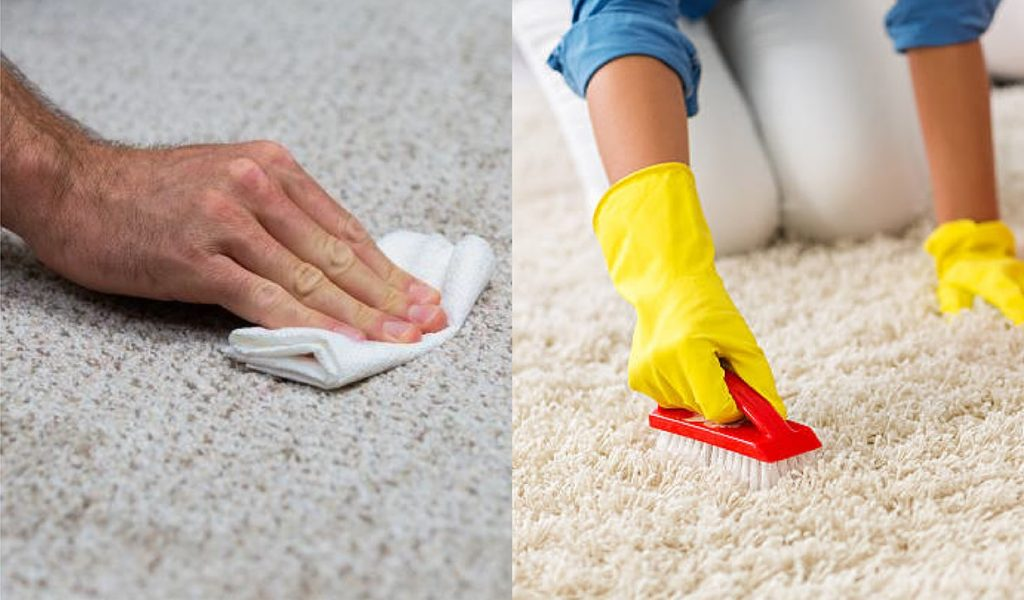
6. How to Get Old Stains Out of Carpet at Home The Full Step by Step
Here is the complete process for treating old carpet stains at home in London applicable to any stain that has been there for more than a few days.
- Step 1: Identify the stain type first: correct chemistry depends on whether it is organic (food, drink, pet) or inorganic (rust, dye, paint). When in doubt, treat as organic with enzyme cleaner first
- Step 2 Dry vacuum the area thoroughly: multiple slow passes to remove any loose dried residue sitting on the surface particularly important for mud, dried food, and old bicarbonate treatments
- Step 3 Apply the correct treatment to a white cloth: never apply product directly to the carpet this over saturates the area and increases wicking risk
- Step 4 Blot from the outside edge of the stain inward: never from the centre outward, which spreads the stain
- Step 5 Allow the full dwell time: minimum 5 minutes for most products, 20–30 minutes for enzyme cleaners on old stains. Skipping dwell time is the most common reason home treatments fail
- Step 6 Blot with cold distilled water: in London, use distilled water to avoid adding hard water mineral residue to the treated area
- Step 7 Blot completely dry: press a dry white towel firmly onto the area and hold absorbing as much moisture as possible before air drying
- Step 8 Assess only when fully dry: never judge the result while the carpet is still damp some stains appear worse wet and better dry, and some treatments need the drying process to complete their action
7. When Old Carpet Stains Need a Professional London Guide
Not every old carpet stain will fully respond to home treatment and knowing when to call a professional saves both time and the risk of making the stain harder to treat by continuing with incorrect home methods.
Call a professional when:
- The stain has been there for more than three to six months and has not responded to at least two correct treatments
- The stain has been treated with incorrect products that may have chemically bonded the compounds further into the fibre
- The stain covers more than 30cm and home treatment is producing uneven results across the area
- Brown stains have appeared after a home or rented machine clean (wicking) and are not resolving with the methods above
- The carpet is wool, silk, or a natural fibre where incorrect home treatment risks permanent damage
- The stain is on a rental property carpet that needs to meet end of tenancy inspection standard in London
Professional carpet cleaning for old stains uses industrial grade hot water extraction at temperatures and pressures that home methods cannot achieve combined with professional pre-treatment chemistry that penetrates the set stain compounds. The result on most old stains is significantly better than repeated home treatment.
Safa Cleaning Services provides professional carpet stain treatment and carpet cleaning services across London covering every borough from Hackney and Islington to Clapham, Canary Wharf, and beyond. We also provide local carpet cleaning near you in London with same day availability for urgent situations like pre-inspection stain treatment.
For a full explanation of professional carpet cleaning in London including the difference between cheap services and genuine deep cleaning read our honest guide on professional carpet cleaning in London.
Old Carpet Stain Won’t Budge? Our London Team Can Help. Safa Cleaning Services Professional carpet stain removal across all London boroughs. Same day available. 100% satisfaction guaranteed. Book your carpet stain removal today →
Frequently Asked Questions Old Carpet Stains London
Q: How do you clean old stained carpet at home?
Identifying the stain type first the correct product depends on whether it is protein-based (blood, dairy), tannin based (tea, coffee, wine), oil-based (food, grease), or urine. Apply the correct treatment to a white cloth, blot from outside in, allow full dwell time (20–30 minutes for old stains), then blot with cold distilled water and dry immediately. Use distilled water in London tap water leaves mineral residue on carpet fibres as it dries.
Q: How do I get old brown stains out of carpet?
Brown stains on carpet are most commonly old tea, coffee, oxidised food oil, or aged urine. For tea and coffee: diluted white wine vinegar solution, blotted in and left for five minutes. For oxidised food oil: bicarbonate of soda to absorb, then washing up liquid solution. For old urine (which browns as uric acid ages): enzyme based cleaner applied with 20–30 minute dwell is the only product that breaks down aged uric acid permanently.
Q: Why are there brown stains on my carpet after cleaning?
Brown stains appearing after carpet cleaning in London have two main causes. Wicking: too much water was used, dissolving old staining from the carpet backing which was pulled up to the surface as the carpet dried. Hard water residue: London tap water (300–400mg/l mineral content) leaves calcium and magnesium deposits in carpet fibres as it dries, creating a brown or yellowish haze. Both are treatable, wait until fully dry, then re-treat with minimum moisture and rinse with distilled water.
Q: What is the best carpet stain remover for old stains?
For old organic stains (food, drink, pet), an enzyme based carpet cleaner is the most effective product; it breaks down the organic compounds in the stain at a molecular level rather than just addressing the surface colour. For old tannin stains (tea, coffee, wine), diluted hydrogen peroxide (3%) applied with 10–20 minutes dwell produces the best result on light coloured carpets. For oil-based old stains, washing up liquid solution is most effective.
Q: Does baking soda and vinegar actually remove old carpet stains?
Baking soda and vinegar work best when used separately, not mixed together. Mixed, they neutralise each other and produce only water and carbon dioxide the bubbling looks active but provides minimal cleaning. Used separately: bicarbonate of soda as a deodoriser and drawing agent (apply dry, leave 30–60 mins, vacuum off), followed by diluted vinegar solution for tannin stains. This combination is effective for old tea and coffee stains on light carpets but less effective on protein stains, urine, and oil.
Q: How do I get old red wine stains out of carpet?
Make a bicarbonate of soda paste with cold water, apply to the stain, and leave to dry completely. Vacuum off. Follow with a solution of washing up liquid and cold water, blotting carefully. For persistent red wine colour, hydrogen peroxide (3%) applied and left for 20 minutes before blotting can lift the remaining pigment test on a hidden area first, as it can lighten some carpet colours.
Q: Can old pet urine stains be removed from carpet?
Yes with the correct treatment. Old pet urine requires an enzyme based cleaner applied generously to the full original accident area (often larger than the visible stain) and left for 30–60 minutes with a damp cloth over it to keep the enzyme active. Standard cleaners address the surface colour but do not break down the uric acid crystals causing the odour which is why the smell returns when the carpet warms up. Enzyme cleaner is the only solution that permanently removes old pet urine odour.
Q: How do I remove old stains from white carpet without making them worse?
White carpets require particular care. Some treatments (hydrogen peroxide, vinegar) can help brighten white carpet while removing stains, but incorrect use can create patchy results. Always test any product on a hidden area first. Apply minimum moisture. Use distilled water for rinsing, particularly important in London, where tap water leaves visible mineral residue on white carpet as it dries. For stubborn old stains on white carpet, professional cleaning with calibrated extraction produces the most even result.
Q: When should I call a professional for old carpet stains in London?
Call a professional when: the stain has not responded to two correct treatments; the stain is large or covers a significant area; incorrect home treatments may have set the stain further; the carpet is a natural fibre like wool or silk; brown staining has appeared after cleaning and is not improving; or the carpet is in a rental property that needs to meet end of tenancy standard. Safa Cleaning Services covers all London boroughs with professional carpet stain treatment same day availability for urgent situations.
Q: How do I book carpet stain removal in London?
Visit our carpet cleaning services London page or contact Safa Cleaning Services directly. We cover every London borough from the City and Shoreditch to Brixton, Clapham, Hackney, Islington, and all outer boroughs with professional carpet stain treatment, hot water extraction, and same day availability for urgent cleaning needs.
Old Stains Are Not Always Permanent But They Need the Right Approach
The difference between an old carpet stain that cannot be removed and one that responds well to treatment is almost always the chemistry used and whether adequate dwell time was allowed, not how much effort was put in or how hard the stain was scrubbed.
Use the correct product for the specific stain type. Give it time to work. Blot never rubs. Rinse with distilled water in London. And if home methods have failed or you are not sure what the stain is, a professional carpet cleaning service with the right equipment produces results that repeated home treatments simply cannot.
Safa Cleaning Services provides professional carpet stain removal and carpet cleaning across all London boroughs. Whether it is a single stubborn old mark or a full carpet that needs restoration, our team brings the chemistry, equipment, and London specific knowledge to produce results that last. Explore our full range of carpet cleaning services in London or browse our carpet cleaning guides for more expert advice.