The builders have left. The tools are gone. The renovation you spent months planning is finally finished.
And then you walk back into the property and see it properly for the first time without scaffolding, dust sheets, and power tools in the way.
Plaster dust on every single surface. Silicone smears on the new tiles. Paint spots on the skirting boards, the windows, and somehow on the ceiling of a room the builders were not working in. Grout haze across the new bathroom floor. A film of fine white dust on every shelf, inside every cupboard, and deep in the fibres of any carpet that was not fully protected.
This is builder’s dust and it is genuinely one of the hardest cleaning challenges a London homeowner or property manager faces. It gets everywhere. It is fine enough to settle invisibly and then reappear the moment light catches a surface. And it requires a completely different approach from a standard home clean.
This guide gives you the complete after builders cleaning checklist room by room, surface by surface along with honest advice on what you can tackle yourself, what requires professional equipment, and how to approach post renovation cleaning in a London property specifically.
48 hrshow long builder’s dust takes to fully settle after work stops clean too early and you clean the same surfaces twice
5–10xfiner than regular household dust builder’s dust penetrates gaps, vents, and fabrics that a standard vacuum cannot fully reach
1 daytypical time for a professional after builders cleaning team to complete a full clean on a standard 2–3 bedroom London property
Before You Start: Two Things That Change Your Entire Result
Most people start cleaning immediately after the builders leave. This is the first mistake and it doubles your workload.
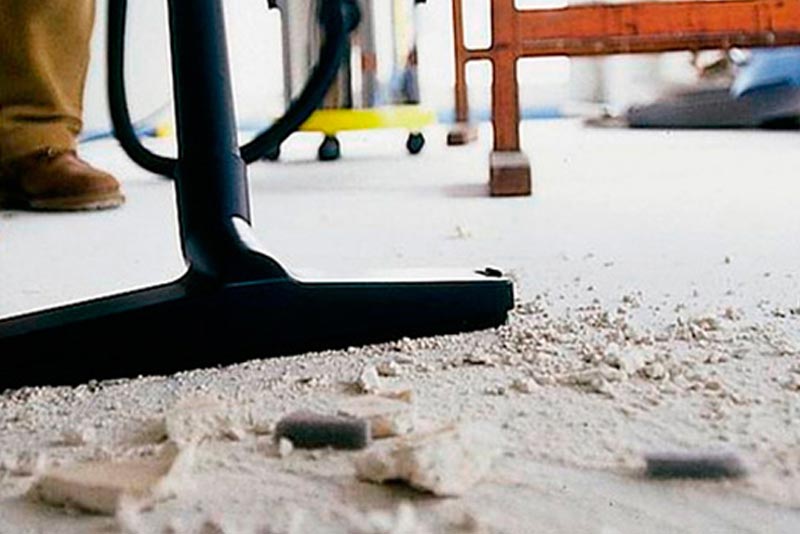
Wait 48 hours before cleaning anything. Builder’s dust is so fine that it stays airborne for up to two days after work stops. If you start cleaning while dust is still settling, every surface you clean will be recoated within hours. Wait the full 48 hours with windows open to ventilate, then begin. The difference in result is significant.
Air the property first. Open every window, every internal door, and every ventilation point for at least 24 hours before cleaning begins. This removes the airborne dust load from the property and significantly reduces how much settles on surfaces during your clean. In London properties with limited cross ventilation which applies to many flats and conversions running fans pointing outward through windows accelerates this process.
Important: Builder’s dust contains silica a fine crystalline particle that is hazardous to breathe in significant quantities. If the renovation involved heavy grinding, sanding, or cutting of concrete, brick, or stone, wear a dust mask during initial cleaning passes and ensure adequate ventilation throughout. This is particularly relevant in London’s older Victorian and Edwardian properties where renovation often disturbs older lime plaster and masonry.
Why After Builders Cleaning Is Different From a Standard Deep Clean
Understanding this distinction is important before you start because applying standard cleaning techniques to post renovation contamination produces a poor result.
In a standard home deep clean, the contamination is organic: skin cells, food residue, bacteria, and surface dirt. These respond well to antibacterial sprays, detergents, and hot water.
In an after builders clean, the contamination is primarily mineral and construction based: gypsum plaster dust, cement, silicone residue, paint splatter, grout haze, adhesive residue, and fine silica particles. These require different products and techniques:
- Plaster dust: requires damp wiping with a wrung out cloth never dry dusting, which simply moves it to another surface and back into the air
- Cement and mortar residue: requires a diluted acid solution (typically citric acid or specialist masonry cleaner) standard surface sprays have no effect
- Grout haze on tiles: must be removed within 24–72 hours before it fully cures specialist grout haze remover applied with a scrubbing pad
- Silicone residue and smears: requires a silicone remover or isopropyl alcohol neither water nor standard cleaning products dissolve cured silicone
- Paint splatter: on glass, tiles, and hard floors requires a plastic scraper and/or specialist paint remover never abrasive scrubbing pads on polished surfaces
- Adhesive residue: from protective films, tape, and packaging requires adhesive remover or surgical spirit scrubbing only spreads it
The correct sequence and the correct product for each type of contamination is what makes an after builders clean produce a result that is actually finished, not just surface clean.
The Complete After Builders Cleaning Checklist Room by Room
Work through this checklist in order. The sequence matters always top to bottom, always dry contamination removed before wet cleaning begins.
WHOLE PROPERTY DO THESE FIRST
These tasks apply throughout the entire property and must be completed before room by room cleaning begins.
- Remove all builder’s debris, packaging, and protective materials from every room
- Vacuum all air vents and extractor fan covers builder’s dust blocks these and recirculates through the property every time ventilation runs
- Wipe all light fittings, ceiling roses, and pendant fittings with a barely damp cloth dust settles heavily on these and falls every time the light is used
- Clean all windows inside glass, frames, and sills builder’s dust and plaster marks settle on every window surface
- Wipe all internal doors on both sides door tops, frames, and handles
- Check and clean all plug sockets and switch plates builder’s dust enters through every gap in the wall surface
- Wipe all skirting boards throughout damp microfibre cloth, not a dry duster
- Clean all radiators surfaces and behind builder’s dust collects behind radiators and circulates when the heating runs
KITCHEN
Kitchens used or worked near during renovation carry the highest contamination load on any horizontal surface. Dust inside cupboards is the most commonly missed area.
- Empty and clean inside all kitchen cupboards every shelf, every corner builder’s dust inside kitchen cupboards is a food hygiene issue, not just an aesthetic one
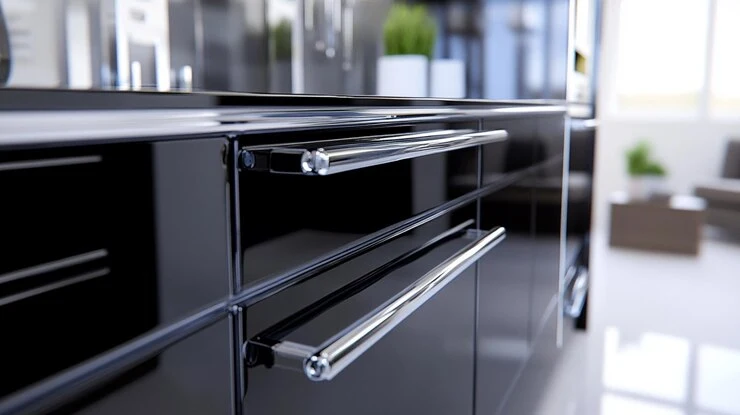
- Wipe all cupboard fronts and handles both sides of every door
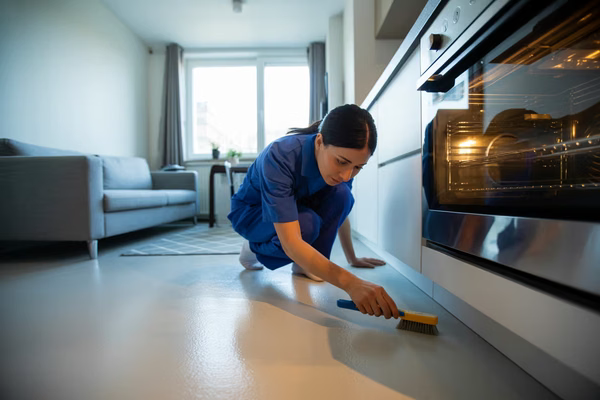
- Clean the inside of the oven, microwave, and dishwasher if these were present during renovation work
- Descale and clean all taps construction splatter on taps is common even when plumbers were not working in the kitchen
- Clean the sink, basin, and drainer
- Degrease and clean all worktops pay attention to the back wall and the joint between worktop and wall where dust accumulates
- Clean the hob and extractor hood
- Check and clean inside drawers
- Sweep and mop the floor kitchen floors after renovation carry cement, adhesive, and plaster residue that requires a degrease mop rather than a standard clean
- Check for and remove any adhesive or silicone residue on tiles or surfaces
BATHROOMS
Bathrooms are often the most contaminated room after renovation particularly if new tiling, plumbing, or bathroom fitting was carried out. Grout haze is the most common and time critical issue.
- Remove all grout haze from new tiles this must be done within 24–72 hours of grouting before the haze fully cures. Use specialist grout haze remover and a scrubbing pad. Water alone will not remove cured grout haze
- Remove any silicone smears from tiles, bath, and shower tray silicone remover or isopropyl alcohol on a cloth. Never scrape glass or polished surfaces
- Clean all new fixtures toilet, basin, bath, shower tray, shower head
- Descale all taps, shower screen, and shower head construction dust combined with London hard water creates deposits that form faster than in a normal bathroom clean
- Scrub all grout lines on new and existing tile work construction dust embeds in grout joints
- Clean the extractor fan cover
- Wipe the mirror and any glass surfaces
- Clean the toilet all surfaces inside and outside
- Clean the floor including corners and the area around toilet and bath feet
- Check all sealant lines ensure builder’s silicone is neat and has been applied cleanly. Any excess must be removed with silicone remover while still possible
BEDROOMS & LIVING AREAS
Bedrooms and living areas carry significant dust loads even when they were not directly worked in builder’s dust travels through the whole property regardless of where work was done.
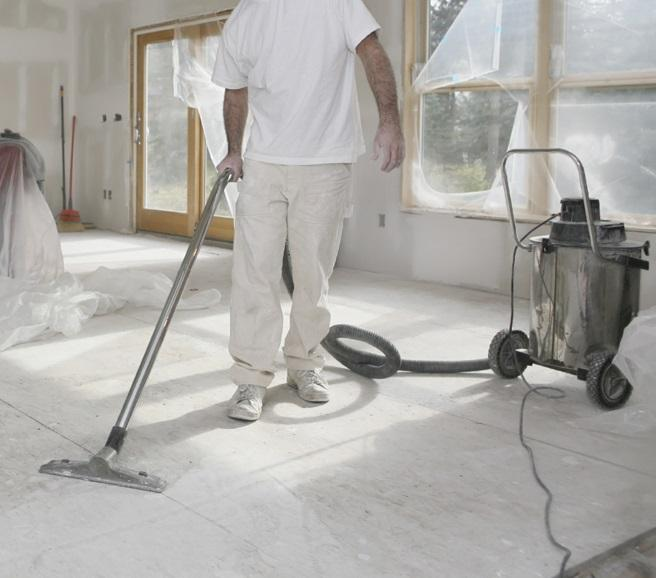
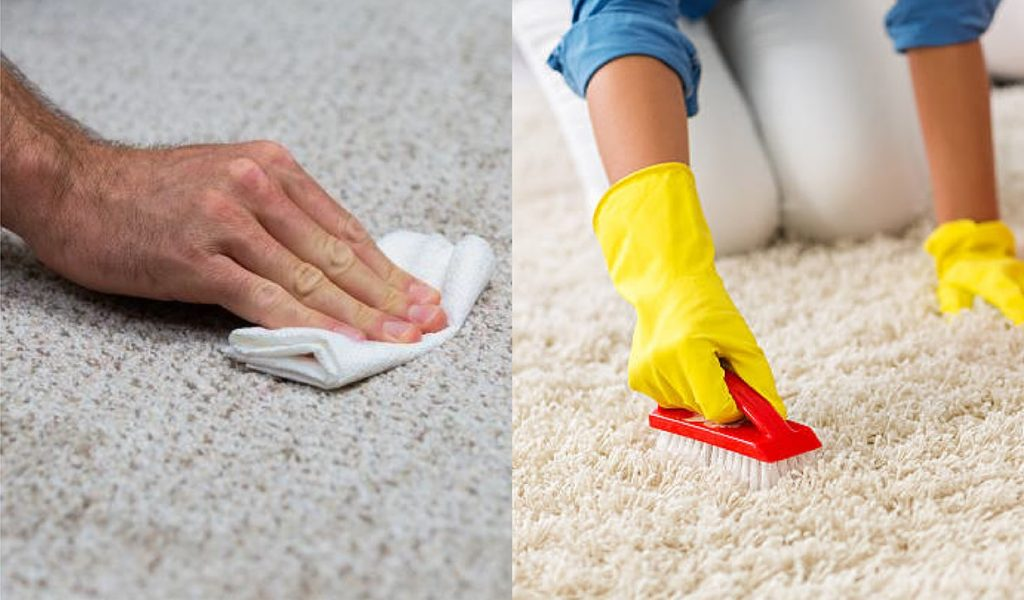
- Vacuum all carpets with a HEPA filter vacuum multiple slow overlapping passes. Builder’s dust embeds in carpet fibres at a depth that a single pass does not fully extract
- Damp mop all hard floors sweep first, then damp mop with a wrung out mop. Multiple passes may be needed to remove the haze of fine dust
- Dust all surfaces top to bottom tops of wardrobes, shelving, window sills, skirting boards. Damp cloth only no dry dusters which return dust to the air
- Vacuum all soft furnishings sofas, armchairs, and upholstered pieces if present during renovation
- Clean inside all wardrobes and storage if these were in the property during the renovation
- Wipe all window sills and frames inside
- Check walls for paint splatter address with paint remover before it fully cures
- Clean all switches and plug sockets in every room
HALLWAYS, STAIRS & ENTRANCE
- Vacuum stairs carefully each tread, riser, and riser corner individually
- Clean the banister and all spindles
- Vacuum and damp mop the hallway floor hallways carry the highest foot traffic contamination load and need particular attention
- Clean the front door inside handle, frame, and any glass panels
- Check and clean under the stairs if accessible
What a Professional After Builders Cleaning Team Does Differently in London
This is an honest comparison because knowing the difference helps you decide what to tackle yourself and where a professional service genuinely produces a better result.
| Task | DIY Approach | Professional After Builders Clean |
|---|---|---|
| Plaster dust removal | Dry dusting (returns dust to air) | HEPA vacuum + damp wipe sequence |
| Grout haze on tiles | Water and cloth (ineffective once cured) | Specialist grout haze remover + timing |
| Silicone residue | Scraping (risks surface damage) | Chemical remover + correct technique |
| Paint splatter on glass | Scraping (risk of scratching) | Specialist paint remover + plastic scraper |
| Builder’s dust in carpets | Standard vacuum (surface only) | Industrial HEPA extraction deep pile |
| Cement residue on floors | Standard mop (ineffective) | Diluted acid clean + multiple passes |
| Air vent contamination | Not usually addressed | Full vent and extractor clean included |
| Inside cupboards and storage | Often missed | Full interior clean included in checklist |
| Time required (2-bed London flat) | Full weekend | 1 professional day (team of 2–3) |
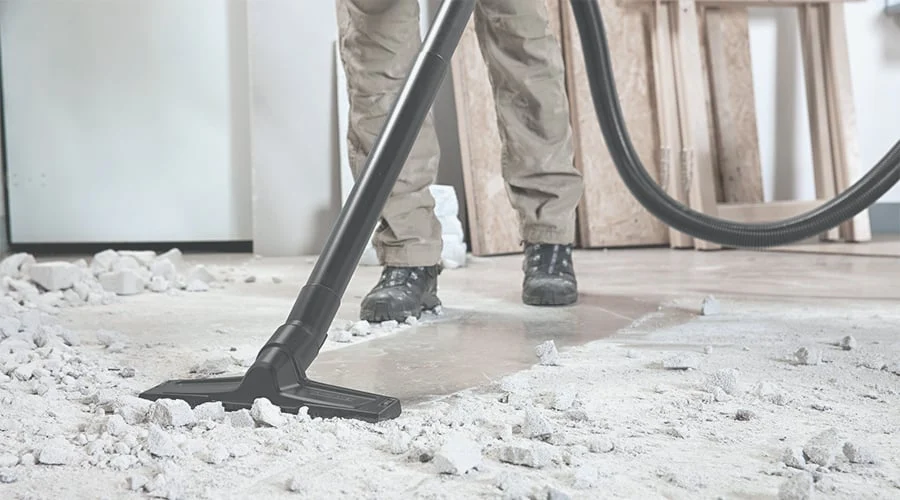
The fundamental difference is equipment and chemistry. Professional after builders cleaning uses industrial grade HEPA vacuum systems, specialist construction residue removers, and techniques developed specifically for post renovation contamination not adapted from standard home cleaning. The result is a property that is genuinely finished, not one that needs repeated cleaning over the following weeks as disturbed dust resettles.
For a full explanation of what professional post construction cleaning in London involves and what to look for in a service provider read our dedicated guide on what to expect from post construction cleaning in London.
After Builders Cleaning in London: What Makes It Different Here
London properties have specific characteristics that affect how post renovation cleaning needs to be approached and which generic checklists written for non-London homes rarely address.
Victorian and Edwardian properties have lime plaster. The majority of period London homes across Islington, Camden, Hackney, Brixton, Clapham, and Hammersmith are built with older lime based plaster rather than modern gypsum board. Renovation work in these properties generates a different type and volume of dust finer, more alkaline, and more penetrating. It settles further from the work site and requires more cleaning passes to fully address.
London’s hard water compounds every cleaning task. Post renovation cleaning in London involves water for every surface. At 300–400mg/l calcium carbonate, London tap water leaves mineral deposits on every surface as it dries. Professional post renovation cleaners in London use distilled water rinses on polished and tiled surfaces to avoid the water marking that tap water creates particularly on new bathroom tiles and kitchen surfaces where the builder’s clean result needs to match the quality of the new installation.
Older properties have more hidden gaps and penetration points. In a modern new build, builder’s dust stays relatively contained. In a Victorian conversion with original floorboards, cornices, and period joinery, dust penetrates into every gap and crevice. A professional after builders clean in a period London property takes longer and requires more detailed attention than the same square footage in a new build something to factor in when getting quotes.
Logistics in London flats require planning. Getting equipment industrial vacuums, mop systems, and cleaning product supplies into a third floor flat with no lift is a different challenge from cleaning a detached house. Professional London cleaning teams are experienced with building access, parking restrictions, and the service logistics that London properties require.
How Long Does After Builders Cleaning Take?
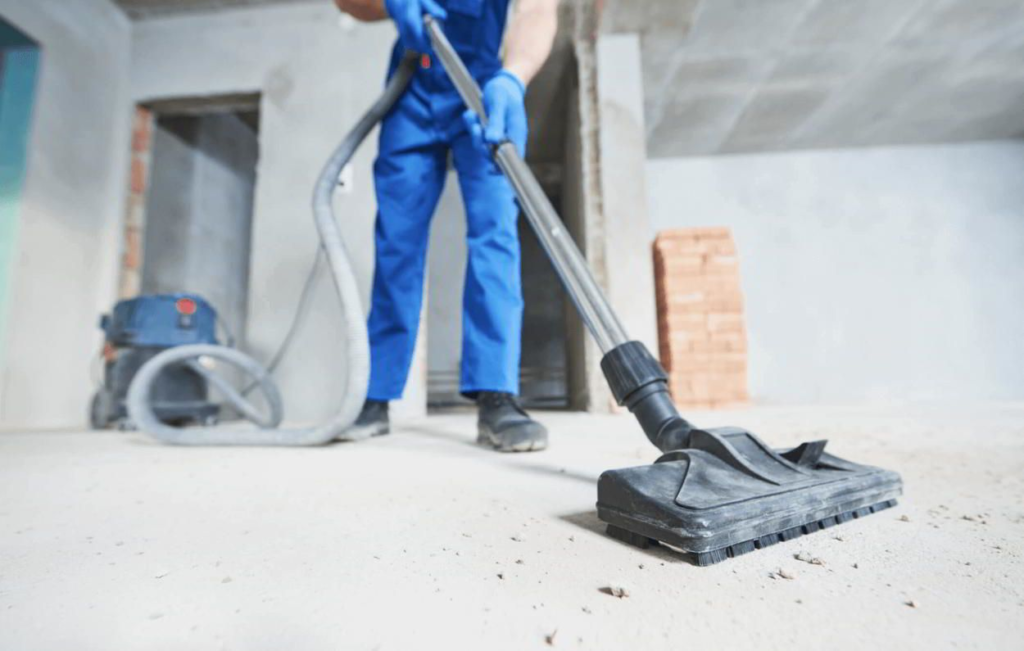
This is one of the most commonly asked questions and the most variable answer, because it depends on the scope of the renovation, the size of the property, and whether a professional team or a single person is doing the work.
| Property Type | DIY (1 person) | Professional Team (2–3 people) |
|---|---|---|
| 1-bedroom flat | 2–3 days | 4–6 hours |
| 2-bedroom flat | 3–4 days | 6–8 hours |
| 3-bedroom house | 4–6 days | 1 full day |
| 4-bedroom house | 1–2 weeks | 1.5 days |
| Single room renovation only | 1 full day | 2–4 hours |
| Kitchen renovation only | 1–2 days | 4–6 hours |
| Full house renovation (gut) | 2–3 weeks | 2–3 days (team) |
These timelines assume the property is properly ventilated for 24–48 hours before cleaning begins. Attempting to clean immediately after builders leave before dust has fully settled adds significantly to cleaning time because surfaces need to be cleaned multiple times.
Professional After Builders Cleaning Across All London Boroughs Safa Cleaning Services | 124 City Road, London EC1V 2NX | HEPA equipment | Specialist construction residue removal | Same day availableBook your after builders clean in London today →
Frequently Asked Questions
Q: What is included in an after builders clean?
A professional after builders clean covers the complete removal of post renovation contamination throughout the property plaster dust from all surfaces using damp wipe techniques, grout haze removal from new tiles, silicone and paint splatter removal, HEPA vacuum cleaning of all carpets and soft furnishings, full window and glass cleaning, inside cupboard cleaning, floor deep cleaning with specialist construction residue removers, and cleaning of all vents, radiators, and light fittings. Full details of what a professional post construction clean covers in London are in our guide on what to expect from post construction cleaning in London.
Q: How do you clean a house after renovation?
Wait 48 hours for dust to settle, then ventilate fully for 24 hours with windows open. Start with the whole property tasks: clean air vents, ceiling fittings, and all window frames throughout. Then work room by room, top to bottom dust and HEPA-vacuum all surfaces before any wet cleaning begins. Use damp cloths rather than dry dusters for all plaster dust. Address grout haze on new tiles immediately with specialist remover. Clean floors last in every room.
Q: How long does after builders cleaning take in London?
A professional team of 2–3 cleaners typically completes an after builders clean on a standard 2-bedroom London flat in 6–8 hours. A 3-bedroom house takes approximately one full day. Larger properties or full gut renovations typically take 1.5–3 days with a professional team. DIY cleaning of the same properties takes 3–10 days for one person working consistently.
Q: Can I do after builders cleaning myself?
Yes with the right approach and equipment. The most important things to get right: wait 48 hours before starting, always use a HEPA-filter vacuum (standard vacuums recirculate fine builder’s dust), use damp cloths not dry dusters, use the correct specialist products for grout haze and silicone residue, and work top to bottom in every room. For most London renovation projects, professional cleaning produces a faster and more thorough result particularly for grout haze and construction residue that requires specific chemistry.
Q: What is the hardest part of cleaning after a renovation?
Builder’s dust penetration is the hardest element because it is so fine that it settles on and inside every surface, including inside closed drawers, cupboards, and appliances. The second hardest is grout haze on new tiles, which becomes permanent if not treated with the correct product within 24–72 hours. Third is construction residue (cement, adhesive, and silicone) on hard surfaces, which requires specific chemical products rather than standard cleaning sprays.
Q: Do I need professional after builders cleaning for an end of tenancy handover?
If renovation work was carried out during a tenancy, yes the property must be returned to the pre-renovation standard, which requires a professional grade post renovation clean as part of the checkout process. Our end of tenancy cleaning service in London includes after renovation scope where required, with documentation suitable for deposit protection schemes.
Q: How much does after builders cleaning cost in London?
Professional after builders cleaning in London typically costs £200–£400 for a 1-bedroom flat, £350–£600 for a 2-bedroom flat, and £500–£1,000 for a 3-bedroom house depending on the extent of renovation work and the level of contamination. Same day and urgent post renovation cleans carry a premium. Contact Safa Cleaning Services for a free site assessment and fixed quote for your specific property.
Q: How do I book a professional after builders cleaning service in London?
Visit our after builders cleaning services page or contact us directly for a free site assessment and fixed price quote. We cover all London boroughs from our base at 124 City Road, London EC1V 2NX visit safacleaningservices.com to see our full range of cleaning services.
Use This Checklist Then Decide How Much You Want to Do Yourself
The after builders cleaning checklist in this guide covers every surface, every room, and every type of post renovation contamination that a London property is likely to have. Print it out. Work through it in order. Wait the full 48 hours before you start. Use the right products for each type of residue.
Do as much as you are able to and for the parts that need professional equipment, specialist chemistry, or simply more time than you have, Safa Cleaning Services covers all London boroughs with experienced post renovation cleaning teams who know exactly what builder’s dust does to a London property and exactly how to remove it.
Explore our specialist after builders cleaning services in London or contact us today for a free quote.