Removing sticky grease off kitchen cabinets requires the right degreasing agent based on your cabinet material. A simple mix of warm water and grease-cutting dish soap safely removes everyday oil splatter. For heavy, stubborn grease, a gentle baking soda paste or diluted white vinegar spray breaks down tough residues without stripping wood, paint, or laminate finishes.
At Safa Cleaning Services, our experienced London kitchen cleaning team handles greasy cabinets every day. In this guide, we break down step-by-step methods for restoring your cabinets using safe household items.
The good news is that you don’t need harsh chemicals or expensive tools to fix this. At Safa Cleaning Services, with years of hands-on cleaning experience. We clean kitchens every single day, and grease buildup on cabinets is one of the most common problems we see. In this guide, we’ll walk you through exactly how to clean grease off kitchen cabinets using simple household items, safe methods, and a little bit of elbow grease (pun intended).
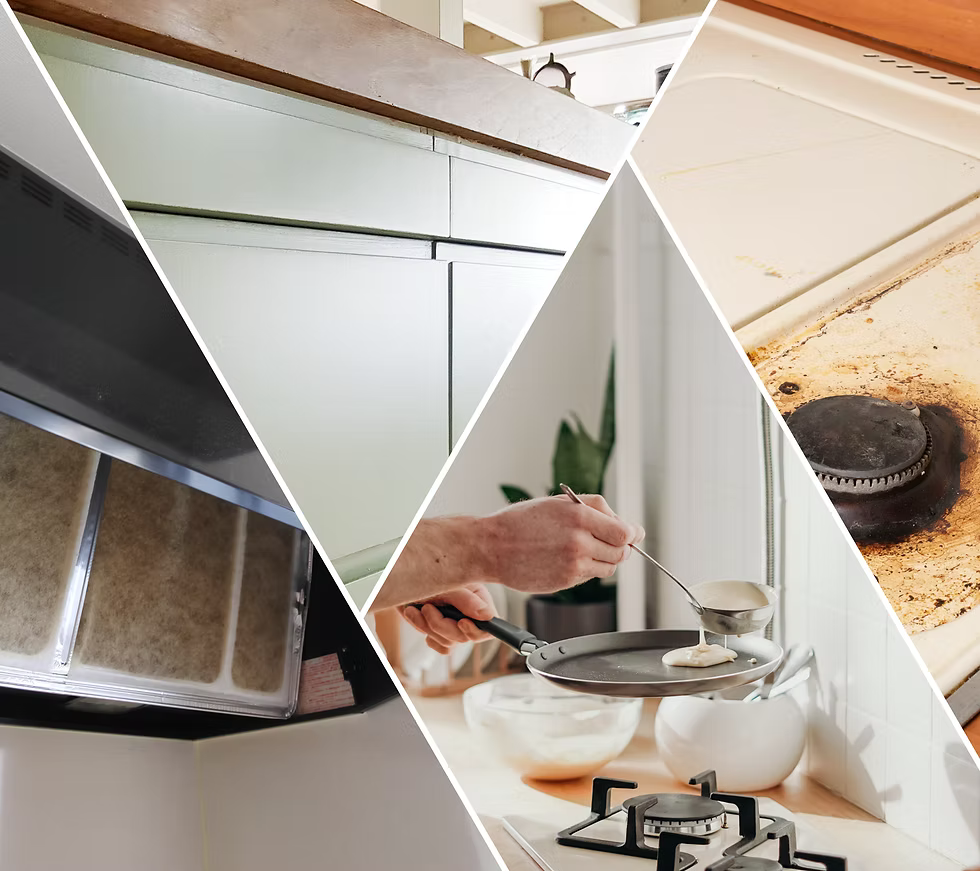
Quick Guide Safe Degreasing Methods by Cabinet Type
| Cabinet Material | Best Safe Cleaner | Application Tool | What to Avoid |
| Solid Wood | Warm Water + Mild Dish Soap | Microfiber Towel | Bleach, Excessive Water, Steel Wool |
| Painted Cabinets | Baking Soda Scrub Paste | Soft Sponge | Rough Scouring Pads, Undiluted Vinegar |
| Laminate & Vinyl | White Vinegar & Water Spray | Microfiber Cloth | Harsh Abrasive Powders |
| Glass Inserts | Vinegar Spray (Equal Parts) | Lint-Free Glass Cloth | Oily or Soapy Cleaners |
Why Do Kitchen Cabinets Get Greasy So Fast?
Every time you fry, sauté, boil, or bake, tiny oil particles float into the air. These particles land on nearby surfaces, including your cabinet doors, handles, and the space above your stove. Over time, this thin layer of grease attracts dust and grime, which makes it stick even harder. Steam from boiling water also adds moisture, which helps grease bond to wood, laminate, and paint.
Cabinets near the stove usually get the worst buildup, but grease can travel further than you’d expect. That’s why a full cabinet cleaning, not just a quick wipe near the stove, gives the best results.
What You’ll Need Before You Start
You probably already have most of these items at home:
- Warm water
- Dish soap (a strong grease cutting one works best)
- Baking soda
- White vinegar
- Microfiber cloths or soft sponges
- An old toothbrush (for handles and corners)
- A spray bottle
Avoid using steel wool or rough scrubbing pads. They can scratch wood, paint, and laminate finishes, which leads to more damage over time.
Step by Step: How to Clean Grease Off Kitchen Cabinets
Step 1: Test a Small Area First
Before cleaning the whole cabinet, test your chosen cleaner on a small, hidden spot. This helps you make sure it won’t damage the finish, especially on painted or wooden cabinets.
Step 2: Wash with Warm Water & Dish Soap Degreaser
For light to medium grease, mix warm water with a few drops of dish soap. Dish soap is designed to break down oil, which makes it one of the safest and most effective options for cabinet cleaning. Dip a soft cloth into the mixture, wring out the extra water, and wipe the cabinet surface in circular motions. Rinse the cloth often so you’re not spreading grease around.
Step 3: Apply a Baking Soda Paste for Stubborn, Sticky Grease
If soap and water alone don’t cut through the grease, baking soda is your next best friend. Mix three parts baking soda with one part warm water to form a thick paste. Apply it directly to greasy spots, let it sit for five to ten minutes, then gently scrub with a soft cloth or sponge. Baking soda is a mild abrasive, so it lifts grease without scratching most cabinet finishes.
Step 4: Spray White Vinegar Solution to Neutralise Remaining Oil
White vinegar is a natural degreaser and works well as a finishing step. Mix equal parts water and vinegar in a spray bottle. Lightly spray the cabinet surface, then wipe clean with a dry microfiber cloth. This step also helps remove any soapy residue left behind and leaves cabinets looking shiny.
Step 5: Clean Cabinet Handles, Hinges, and Tight Crevices
Grease loves to hide in small spaces like door handles, hinges, and corners. Use an old toothbrush dipped in your soapy water or baking soda mixture to scrub these tight spots. This small step makes a big difference in how clean your kitchen feels overall.
Step 6: Dry and Buff the Cabinets
Once you’re done cleaning, always dry the cabinets with a clean, dry cloth. Leftover moisture can damage wood over time and may cause streaks on painted or laminate surfaces. Buffing also brings back a bit of natural shine.
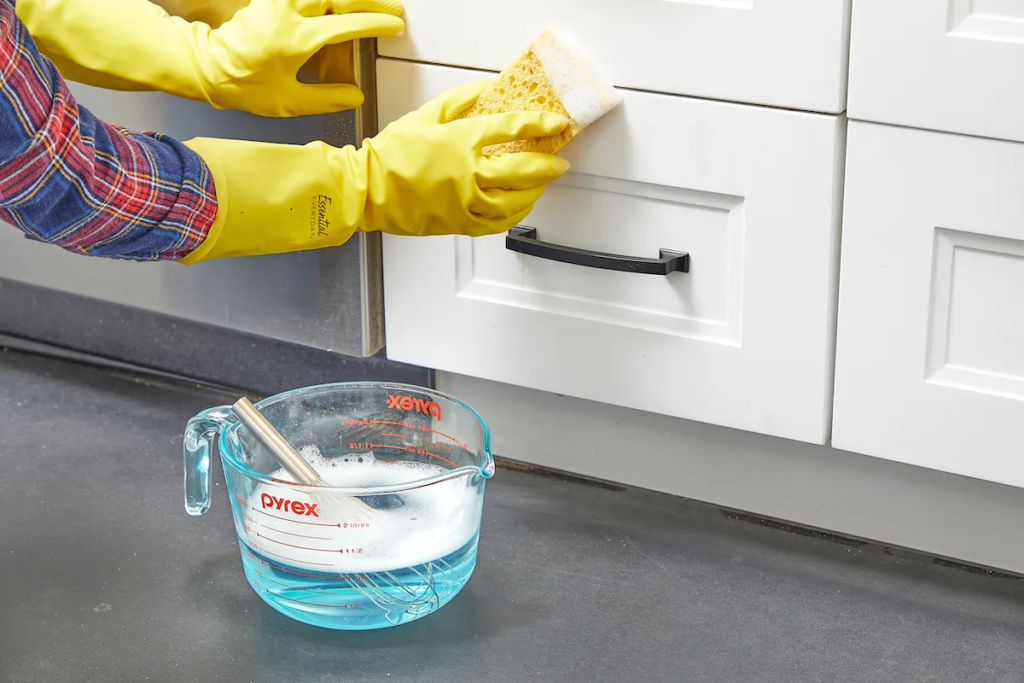
Cleaning Methods for Different Cabinet Materials
Not all cabinets are the same, so it helps to adjust your method based on the material.
Safely Cleaning Greasy Wood Cabinets
Stick to warm water mixed with a few drops of mild dish soap. Avoid soaking wood, as excess moisture can cause warping or peeling over time.
Removing Grease from Painted Cabinets
A mild baking soda paste works wonders on painted surfaces. Scrub gently in circular motions to avoid wearing down or dulling the paint coat.
Cleaning Laminate & Veneer Cabinets
A diluted white vinegar spray is ideal for laminate surfaces. It cuts through grease film without leaving streaks or damaging the synthetic bond.
Streak Free Finish for Glass Cabinet Inserts
Use a 50/50 mix of white vinegar and warm water paired with a lint-free glass towel to achieve a clear, streak-free shine.
Common Cabinet Cleaning Mistakes to Avoid
To protect your kitchen investment, avoid these common pitfalls when removing grease:
- Using Steel Wool or Scouring Pads: These scrubbers cause micro scratches on wood varnish and paint, making future grease stick even deeper.
- Applying Harsh Chemicals (Bleach/Ammonia): Bleach discolours paint and strips natural oil finishes from timber cabinets.
- Soaking the Cabinets with Excess Water: Leaving wood or MDF damp leads to swelling, edge peeling, and mould growth. Always dry immediately.
How to Prevent Grease Buildup in the Future
Cleaning grease off kitchen cabinets is much easier when you don’t let it build up in the first place. A few simple habits can save you a lot of scrubbing later.
Wipe down cabinets near the stove once a week, even if they don’t look dirty yet. Use your range hood or open a window when cooking, since this reduces the amount of grease that lands on surfaces. Covering pans while frying also cuts down on splatter significantly. These small changes add up and keep your kitchen looking fresh for longer.
When to Call a Professional Cleaning Service
Sometimes grease buildup is too heavy, too old, or too stubborn for DIY methods, especially in rental kitchens, restaurants, or homes that haven’t been deep cleaned in a while. If you’ve tried scrubbing and the grease still won’t budge, or if you simply don’t have the time, a professional deep clean can save your cabinets from long term damage.
At Safa Cleaning Services, our team uses safe, effective techniques to remove built up grease without harming your cabinet finish. We understand which products work best for wood, laminate, and painted surfaces, so your kitchen gets a deep clean without any guesswork. If you’d like help restoring your kitchen cabinets, visit us at Safa Cleaning Services to learn more or book a service.
Keeping Your Kitchen Cabinets Grease Free Key Takeaways
Greasy kitchen cabinets are a common problem, but they’re also easy to fix once you know the right steps. With warm soapy water, baking soda, and a bit of vinegar, most grease buildup can be removed safely at home. For tougher jobs, a professional cleaning team can help restore your cabinets and keep your kitchen looking its best.
Frequently Asked Questions About Cleaning Kitchen Cabinet Grease
What is the best homemade degreaser for kitchen cabinets?
A simple mixture of warm water and grease-cutting dish soap works best for light to medium grease. For heavy, baked-on buildup, a 3:1 baking soda and water paste is the most effective natural degreaser.
How do you remove sticky grease off wood cabinets without ruining the finish?
Dampen a soft microfiber cloth with warm soapy water and wipe gently along the wood grain. Immediately dry the surface with a separate dry cloth to prevent moisture damage.
Can I use white vinegar on white painted cabinets?
Yes, but only in diluted form (equal parts water and white vinegar). Avoid letting vinegar sit on painted surfaces for too long, and wipe clean immediately to protect the paint layer.
Is Dawn dish soap safe for all cabinet materials?
Yes. Dawn is specifically formulated to break down cooking oils and grease. Diluted in warm water, it is safe for solid wood, painted finish, laminate, and glass surfaces.
When should I hire a professional kitchen cleaning service in London?
If grease buildup is severely hardened, covers high ceiling height cabinets, or if you are preparing a property for tenancy handover/sale, hiring professional London cleaners ensures deep restoration without damaging cabinet finishes.
How do you get sticky grease off wood cabinets?
Wipe the wood with a warm, soapy water mix using a soft cloth, then dry right away. For stubborn spots, a gentle baking soda paste works well without harming the finish.
What household items cut through grease easily?
Dish soap, baking soda, and white vinegar are the most effective grease-cutters you likely already have at home. Together, they handle most kitchen grease without needing harsh chemicals.
Is Dawn dish soap good for cleaning kitchen cabinets?
Yes, Dawn is known for breaking down grease and oil quickly, making it a popular choice for cabinet cleaning. Just use it diluted in warm water rather than applying it directly.
Can grease buildup ruin kitchen cabinets permanently?
Yes, if grease sits for too long, it can stain, discolor, or weaken the finish over time. Regular cleaning prevents this kind of long term damage.
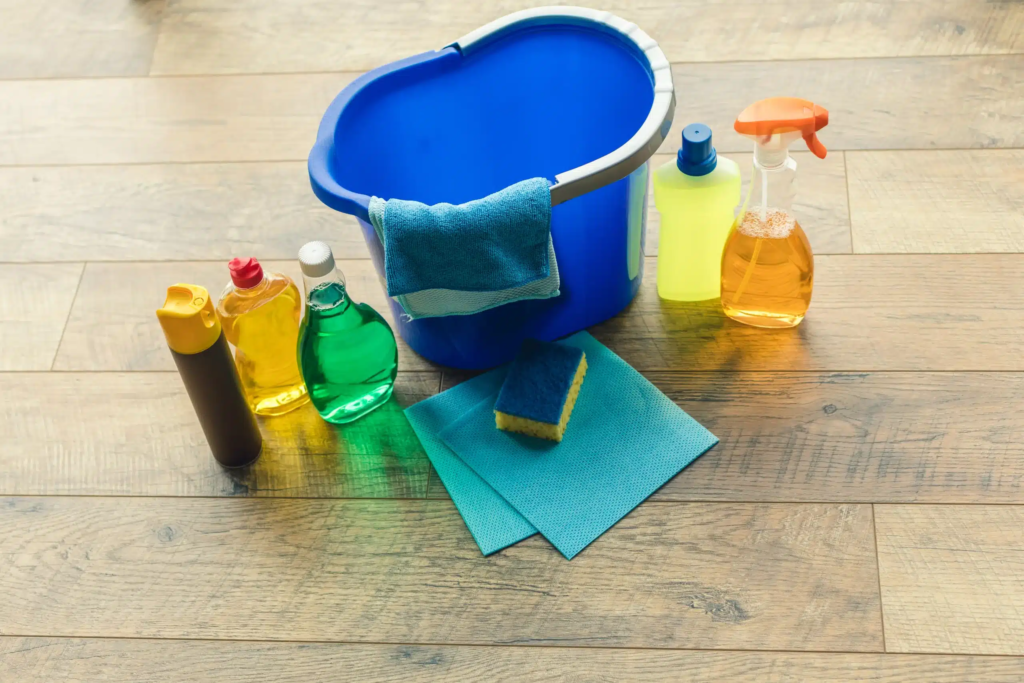
Quick Tips & Popular Solutions for Cabinet Care
- Best degreaser for kitchen cabinets A mix of warm water and dish soap is one of the safest and most effective degreasers for everyday use. For tougher grease, baking soda paste adds extra cleaning power.
- How to clean wood kitchen cabinets naturally: Warm water with a few drops of dish soap, followed by a dry cloth, cleans wood cabinets naturally and safely. Vinegar and water can be used occasionally for extra shine.
- How to remove sticky residue from cabinets: Apply a baking soda paste to sticky spots, let it sit for a few minutes, then wipe clean with a damp cloth. This lifts residue without scratching the surface.
- Deep cleaning kitchen cabinets before selling a house: A full deep clean, including handles, corners, and interior shelves, helps cabinets look fresh for buyers. Hiring a professional service ensures nothing is missed before listing photos or showings.
Ready for a Spotless Kitchen? Book London’s Cabinet Cleaning Experts Today!
DIY degreasing takes time and effort, and stubborn oil residue often requires specialized care. If your kitchen cabinets need a deep restoration without the risk of damaging wood, paint, or laminate finishes, we are here to help.
Our experienced London cleaning team uses safe, eco-friendly, and highly effective degreasing techniques to bring back your kitchen’s original shine.
Get a Free Quote or Schedule Your Deep Clean:
- Visit Us: Safa Cleaning Services
- Fast Booking: Book our expert commercial kitchen cleaning services in London in just a few clicks!
- contact us