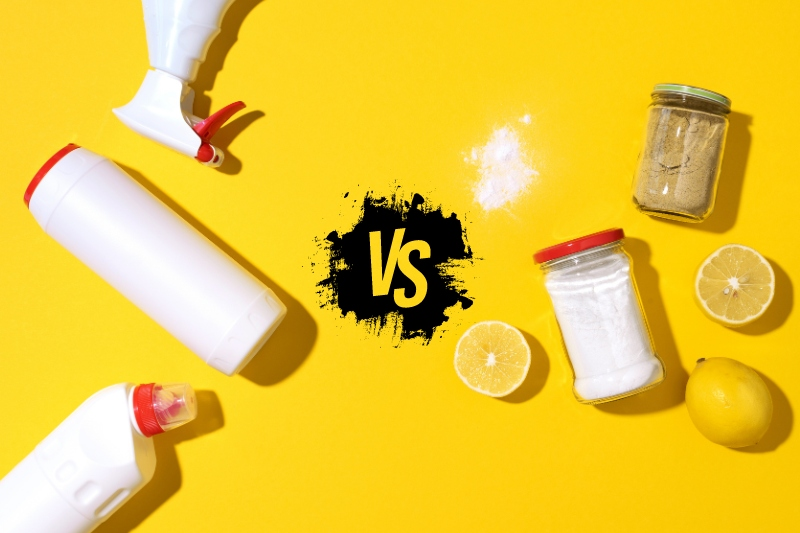
You open the cupboard under your sink. You see a row of brightly coloured bottles bleach, antibacterial spray, limescale remover, oven cleaner. They smell sharp. The labels say “keep away from children.” And somewhere in the back of your mind, a question forms:
Are these cleaning products actually safe to use in my home?
It is a question that more and more London homeowners, parents, and office managers are asking right now. And the answer is more complicated and more important than most people realise.
This guide gives you the full, honest picture. We compare non-toxic cleaning products with traditional chemical cleaning products, explain the real risks of professional cleaning chemicals, and show you exactly how to keep your home spotless without putting your family’s health at risk.
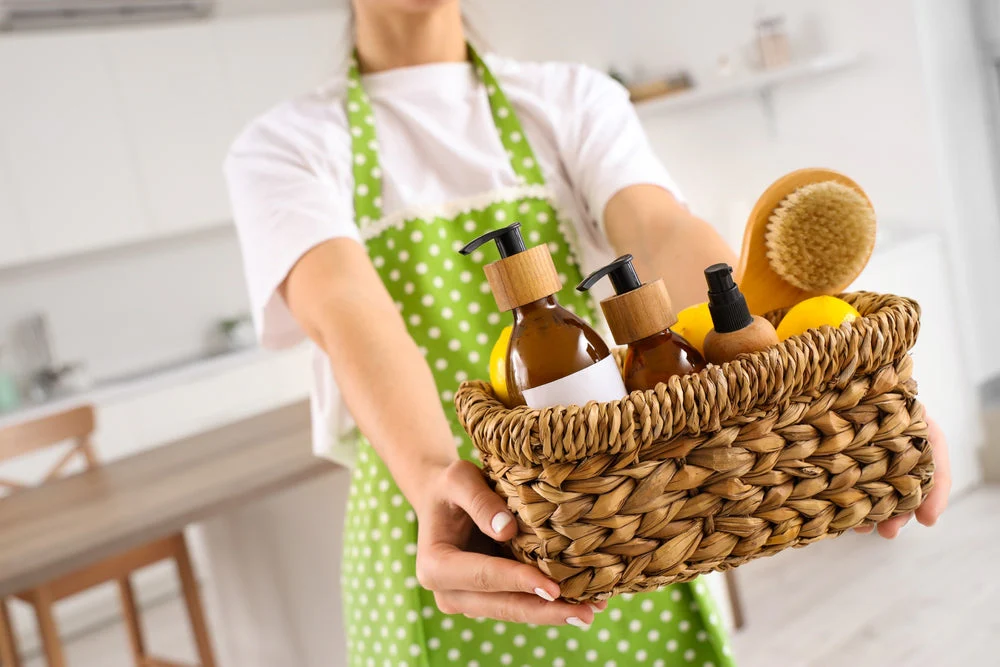
At Safa Cleaning Services, we have cleaned hundreds of London homes and offices. We know exactly what works and what you should never mix together.
The Real Problem With Standard Chemical Cleaning Products
Most people do not think twice before spraying bleach on a worktop or using a chemical oven cleaner. These products have been in our homes for decades. They feel normal. They feel safe.
But here is what the labels do not tell you clearly enough.
Many standard household cleaning products contain volatile organic compounds (VOCs) chemicals that evaporate into the air you breathe at room temperature. Studies have repeatedly linked high indoor VOC levels to headaches, dizziness, throat irritation, and in long term exposure cases, more serious respiratory conditions.
The BBC reported in early 2026 that UK researchers are actively working to understand and reduce harmful chemicals including PFAS found in common household cleaning solutions. For London flats where ventilation is limited, this matters enormously.
This is not about being alarmist. It is about making an informed choice. And for many London families, switching to chemical free cleaning products has made a real, noticeable difference to their home’s air quality and their daily comfort.
What Exactly Are Non Toxic Cleaning Products?
The term nox toxic cleaning products refers to cleaning solutions made without chemicals known to cause harm to human health, animals, or the environment. They are typically plant based, biodegradable, and free from synthetic fragrances, phosphates, and chlorine bleach.
This does not mean they are weak. That is the biggest myth that holds people back from making the switch.
Modern non toxic cleaning products use powerful natural compounds like citric acid for limescale, enzymes for grease, and tea tree oil for bacteria that target dirt at a molecular level. They clean just as thoroughly. They just do it without the toxic side effects.
The difference is particularly important in homes with young children, elderly residents, people with asthma, or pets. For these households, reducing exposure to harsh chemical cleaning products is not just a lifestyle choice it is a genuine health decision.
Chemical Cleaning Products: What Are You Actually Using?
Let us get specific. Here are the most common ingredients in standard household and professional cleaning chemicals and the honest truth about each one.
Bleach (Sodium Hypochlorite)
Bleach is the most widely used cleaning chemical in UK homes. It kills bacteria effectively. But it is also highly corrosive, damages lung tissue when inhaled in enclosed spaces, and reacts dangerously when mixed with ammonia or acidic cleaners creating toxic chloramine gas.
Many London kitchen and bathroom cleaners are bleach based. If you have ever felt your eyes sting or your throat tighten while cleaning that is the bleach fumes at work.
Ammonia
Found in many glass cleaners and multi surface sprays. Ammonia is effective at cutting grease and leaving streak free finishes. But it is also a respiratory irritant. Mixed with bleach which many people accidentally do it becomes genuinely dangerous.
Phosphates
Common in dishwasher tablets and heavy duty degreasers. When phosphates enter London’s waterways through your drains they cause algae blooms that deplete oxygen and kill aquatic life in the Thames and surrounding waterways.
Synthetic Fragrances
That “fresh lemon” or “ocean breeze” smell in most cleaning products comes from a mixture of synthetic chemicals, many of which are classified as allergens. For asthma sufferers and London has very high rates of urban asthma these artificial fragrances are a significant trigger.
The honest truth? Many of the professional cleaning chemicals sold in UK supermarkets are more powerful than necessary for everyday home cleaning tasks and that extra power comes with extra risk.
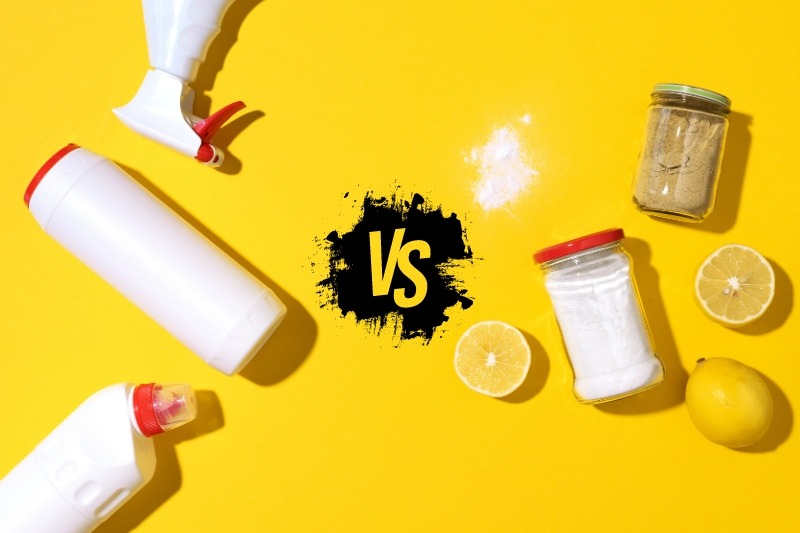
Non-Toxic vs Chemical A Side by Side Honest Comparison
Here is the real-world comparison that most guides do not give you.
Bacteria and Germ Killing
Chemical products: Bleach and quaternary ammonium compounds kill 99.9% of bacteria fast. Highly effective for clinical-grade disinfection.
Non-toxic alternatives: Tea tree oil, thymol (from thyme), and hydrogen peroxide based non-toxic cleaning products have all demonstrated strong antibacterial efficacy in independent studies. For everyday home use, they are more than sufficient.
Grease and Kitchen Grime
Chemical products: Highly alkaline degreasers cut through oven grease and hob splatter quickly and with minimal scrubbing.
Non-toxic alternatives: Enzyme based and citrus degreasers work very well on fresh grease. For baked on oven grime, a bicarbonate paste left to soak overnight delivers comparable results. See our full London oven cleaning guide for step by step instructions.
Limescale London’s Number One Problem
Chemical products: Hydrochloric acid-based limescale removers dissolve build-up quickly but they corrode chrome fittings, damage grout, and emit fumes that irritate airways.
Non-toxic alternatives: Citric acid is scientifically proven to dissolve calcium carbonate the compound that makes up limescale just as effectively. It is safe, food grade, and kind to surfaces. Our guide on how to remove limescale from London homes uses this approach exclusively.
Mould Treatment
Chemical products: Bleach bleaches the surface of mould making it appear gone. But it does not penetrate porous surfaces like grout or plaster. The mould roots survive and regrow within weeks.
Non-toxic alternatives: White vinegar and tea tree oil penetrate porous surfaces and kill mould at the root. For London homes dealing with persistent black mould, this is the smarter long term solution. Read our expert guide on removing black mould in London homes to understand exactly why.
The Hidden Costs of Chemical Cleaning Products in London
The price on the bottle is not the real cost of chemical cleaning products. There are hidden costs that most people never add up.
Health costs. Increased GP visits for respiratory irritation, skin reactions, and allergy flare ups linked to household chemical exposure cost the NHS and individual families enormously every year.
Environmental costs. London’s sewage and waterway treatment systems are not designed to fully filter out all synthetic cleaning chemicals. Phosphates, surfactants, and preservatives pass through and accumulate in the River Thames ecosystem.
Surface damage costs. Harsh professional cleaning chemicals used too frequently degrade grout, strip sealants, dull chrome, and age surfaces faster than natural alternatives. In London’s older Victorian and Edwardian properties, this damage is both expensive and difficult to reverse.
When you factor in these hidden costs, chemical free cleaning products often work out cheaper in the long run even when the upfront bottle price is slightly higher.
When Chemical Cleaning Products Are Still Justified
This is where we give you a genuinely honest answer unlike most guides on this topic.
There are situations where strong chemical cleaning products or professional cleaning chemicals are the right choice:
- Serious infection control: In a home where someone has been seriously ill with a contagious infection, clinical grade disinfection may be appropriate.
- Commercial food preparation areas: London restaurants and commercial kitchens must meet Environmental Health standards that sometimes require specific chemical certifications.
- Extreme neglect scenarios: A property left uncleaned for years may need an initial heavy duty chemical treatment before transitioning to non toxic maintenance cleaning.
- Specific pest treatment: Some pest related disinfection requires regulated professional chemicals and must be handled by certified contractors.
For these scenarios, the key is to use the minimum effective dose, ensure maximum ventilation, and transition to non-toxic cleaning products for all ongoing maintenance cleaning as soon as possible.
Making the Switch: A Practical Guide for London Homes
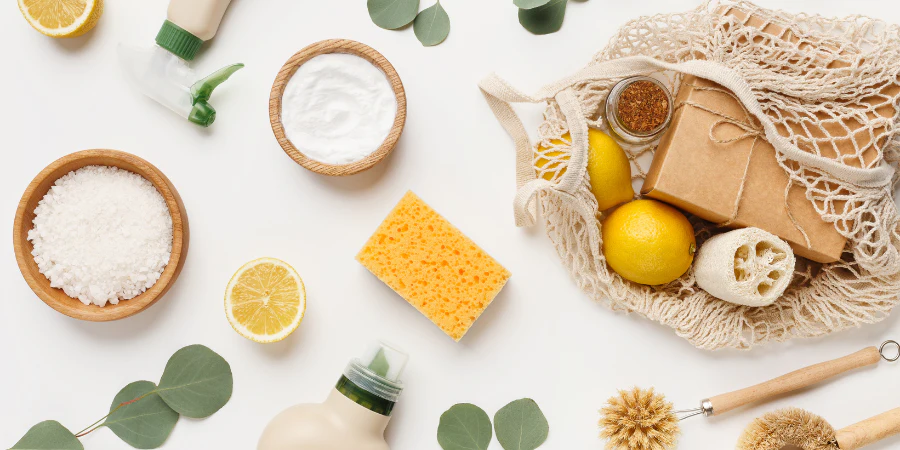
You do not need to throw everything out at once. The smartest approach is a gradual transition replacing each chemical cleaning product with a non-toxic alternative as you run out.
Start with the products you use most frequently and in the most enclosed spaces. Your bathroom spray and kitchen surface cleaner are the highest priority swaps. These are the products you use daily, often in small rooms with limited ventilation.
Next, tackle your oven cleaner and limescale products two of the most chemically aggressive items in the average London home. Our guides on oven cleaning and limescale removal show you exactly how to do this with chemical free cleaning products that genuinely work.
Finally, address your mould treatments. If black mould is a recurring problem in your property common in London’s older housing stock switching to a non-toxic mould solution that kills the root (not just bleaches the surface) will actually solve the problem rather than just mask it temporarily.
Why This Matters More in London Than Anywhere Else in the UK
London properties have specific characteristics that make the choice between non-toxic and chemical cleaning products more significant than in most other UK cities.
London flats particularly in inner boroughs like Hackney, Tower Hamlets, Southwark, Lambeth, and Islington are often smaller and less well ventilated than houses elsewhere in the UK. Chemical fumes accumulate faster and linger longer. The impact on air quality is disproportionately high.
London also has the hardest water in the UK. This means limescale builds up faster here than anywhere else and people tend to use more chemical limescale remover more frequently. Switching to a citric acid based non-toxic alternative reduces both the chemical load and the surface damage over time.
London’s older housing stock Victorian terraces in areas like Brixton, Stoke Newington, Peckham, and Hammersmith often features porous grout, original plasterwork, and period fittings that are particularly vulnerable to damage from harsh professional cleaning chemicals. Gentle, pH-neutral non toxic cleaners protect these surfaces while keeping them clean.
For commercial properties and offices across the City of London, Canary Wharf, and beyond, our commercial restroom cleaning services demonstrate that professional hygiene standards are fully achievable with certified non-toxic and chemical free products.
Want a Truly Clean London Home Without the Chemical Risk? Safa Cleaning Services uses only certified non-toxic and eco-friendly products across every London borough. Book your professional clean today →
Frequently Asked Questions
Q: Are non-toxic cleaning products as effective as chemical ones for killing germs?
For everyday home use, yes. Plant based and enzyme based non-toxic cleaning products kill the bacteria and viruses you encounter in a typical London home. Clinical grade disinfection for medical settings is a different case but for domestic use, non-toxic solutions are entirely sufficient.
Q: What are the most dangerous chemical cleaning products to use at home?
Bleach mixed with ammonia creates toxic chloramine gas. Bleach mixed with acidic cleaners releases chlorine gas. These are genuinely dangerous combinations. Oven cleaners containing sodium hydroxide are also highly corrosive. These are the chemical cleaning products that pose the highest risk in enclosed London spaces.
Q: Is chemical free cleaning just a marketing trend?
No. The science behind chemical free cleaning products is solid. Citric acid dissolves limescale. Enzymes break down organic matter. Tea tree oil kills bacteria. These are well researched natural compounds not just feel good branding.
Q: Can I use non-toxic products in a professional or commercial setting?
Absolutely. Many certified non-toxic cleaning products now carry full Environmental Health and British Standards certification for commercial use. Safa Cleaning Services uses these in London offices, restaurants, and commercial restrooms daily.
Q: How do I remove black mould without bleach?
White vinegar and tea tree oil are proven non-toxic mould killers that penetrate porous surfaces which bleach cannot do. Our full guide on removing black mould in London walks you through the complete process.
Q: Are professional cleaning chemicals used by cleaning companies toxic?
It depends entirely on the company. Many traditional cleaning firms still use harsh professional cleaning chemicals containing bleach, quaternary ammonium compounds, and synthetic fragrances. Safa Cleaning Services uses only certified non-toxic, eco-friendly products on every job protecting your home and your family.
Q: What is the 20-minute rule in cleaning?
The 20-minute rule refers to the contact time many non toxic cleaning products need to work fully particularly on limescale, grease, and mould. Unlike chemical cleaners that work through aggressive corrosion, natural products work through chemistry. Giving them 15-20 minutes of contact time produces significantly better results.
Q: Are non-toxic cleaners safe for children and pets?
Yes genuine non-toxic cleaning products using plant based ingredients are far safer around children and pets than bleach or ammonia based cleaners. Always check labels for any essential oil concentrations if you have very young babies or specific sensitivities.
Q: Where can I buy chemical free cleaning products in London?
Most major London supermarkets now stock chemical free cleaning product ranges from brands like Method, Ecover, and Bio-D. For concentrated refillable formats which are more economical and produce less plastic waste check independent health shops and online UK retailers.
Q: How do I get professional non-toxic cleaning in London?
Simply contact Safa Cleaning Services. We cover all London boroughs with fully insured, professional teams using certified non-toxic and eco-friendly cleaning products on every job.
Which Is Actually Safer?
The honest answer is that non-toxic cleaning products are genuinely safer for your health, your family, your home’s surfaces, and London’s environment in the vast majority of everyday cleaning situations.
Chemical cleaning products are not going away overnight. But there is no longer any reason to default to harsh professional cleaning chemicals for routine home cleaning when plant based, enzyme driven chemical free alternatives deliver equivalent results without the risks.
The switch is easier than most people expect. It often costs the same or less. And the benefits better air quality, safer surfaces, healthier living spaces are real and immediate.
When you need professional help, Safa Cleaning Services is here delivering thorough, certified non toxic cleaning across every London borough, from Hackney to Hammersmith, Camden to Croydon.